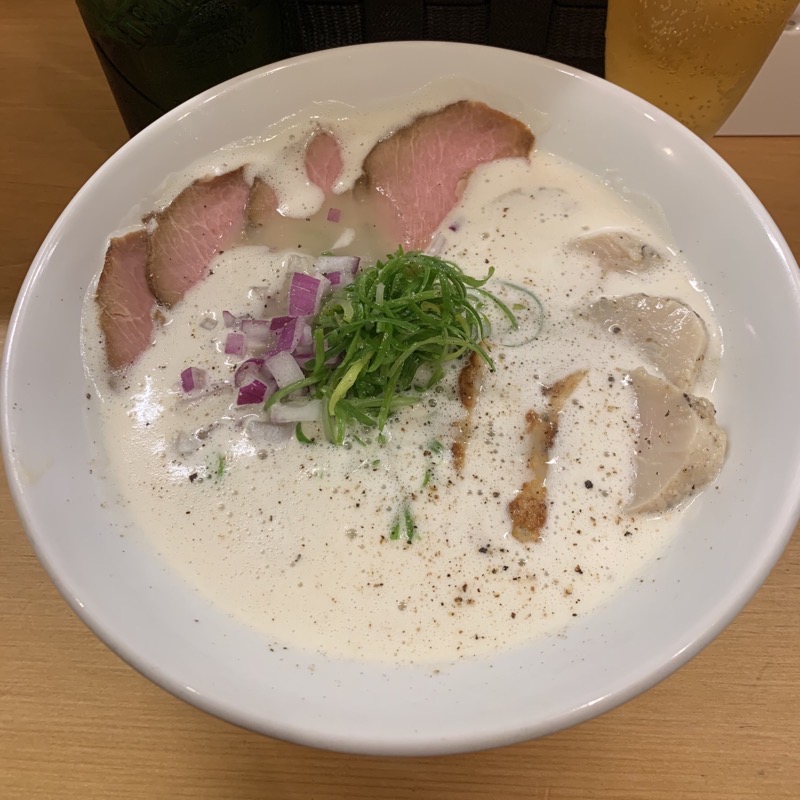
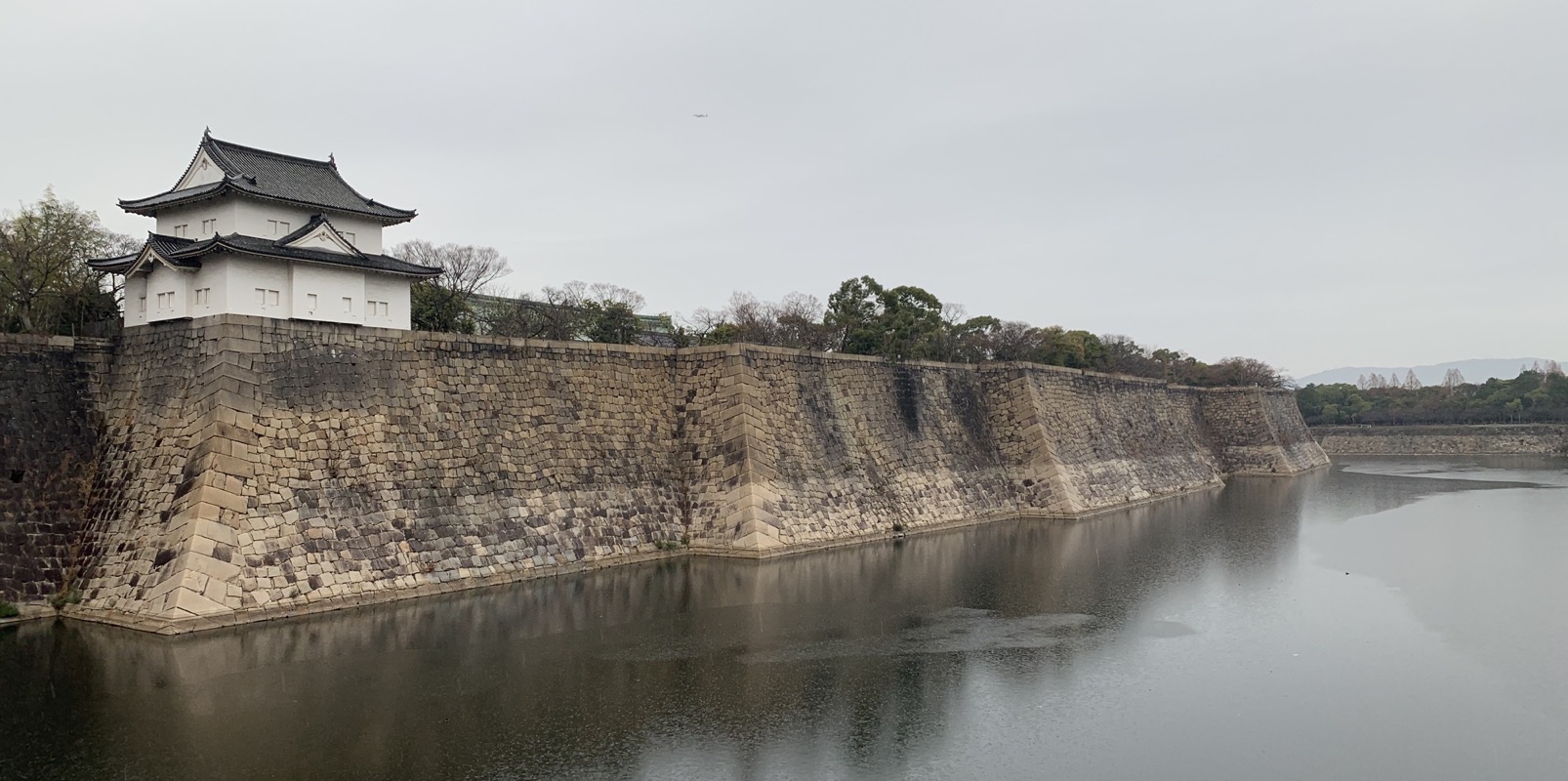
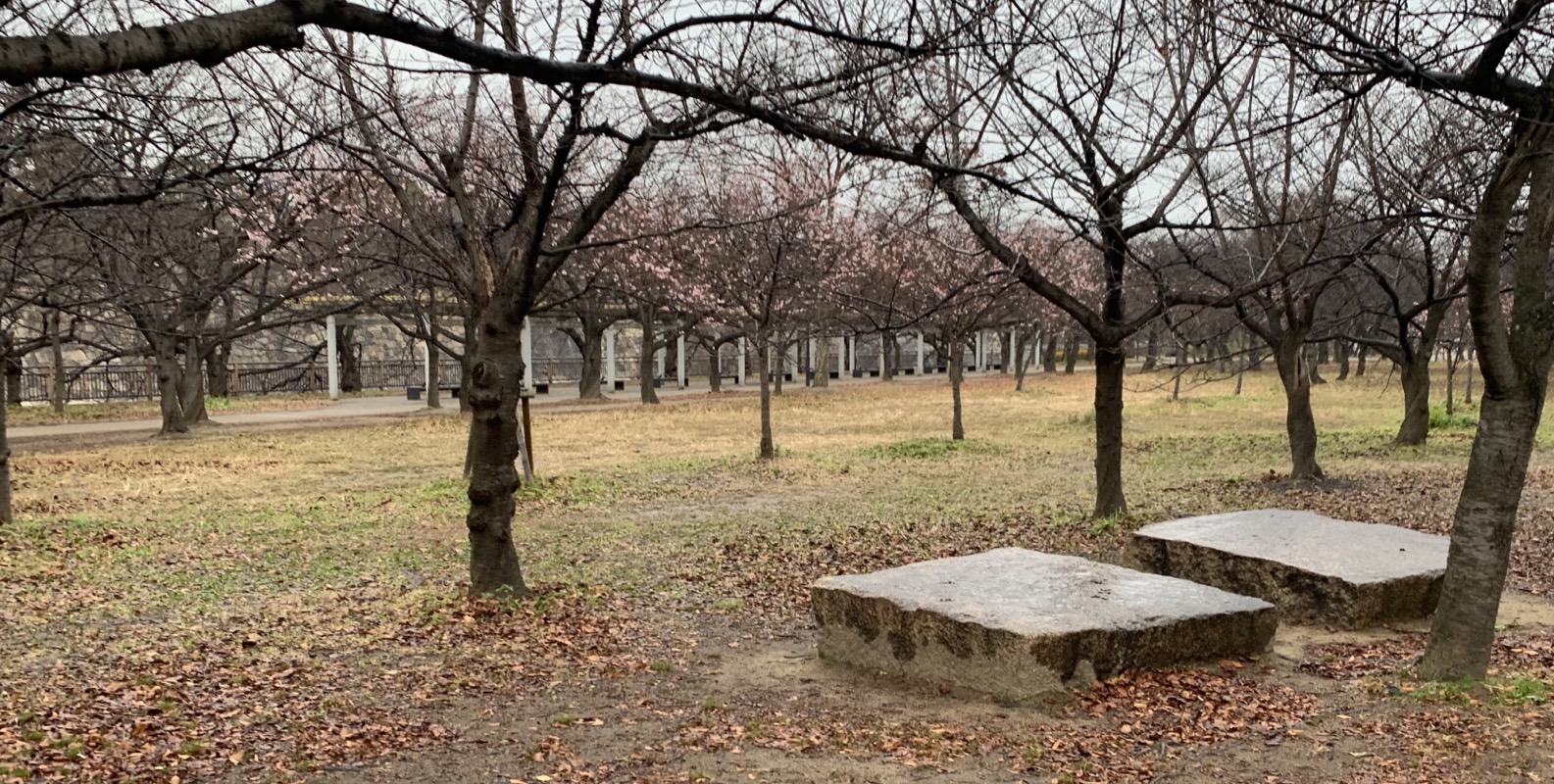
It was a rainy day today. We were going to be hitting get castle gardens, but it’s winter and raining and nobody wants to see that, so we went to the Osaka Peace Museum and then to the aquarium. We got there plenty early so sat around playing games on our phone, then we were let in. Exciting, hey?
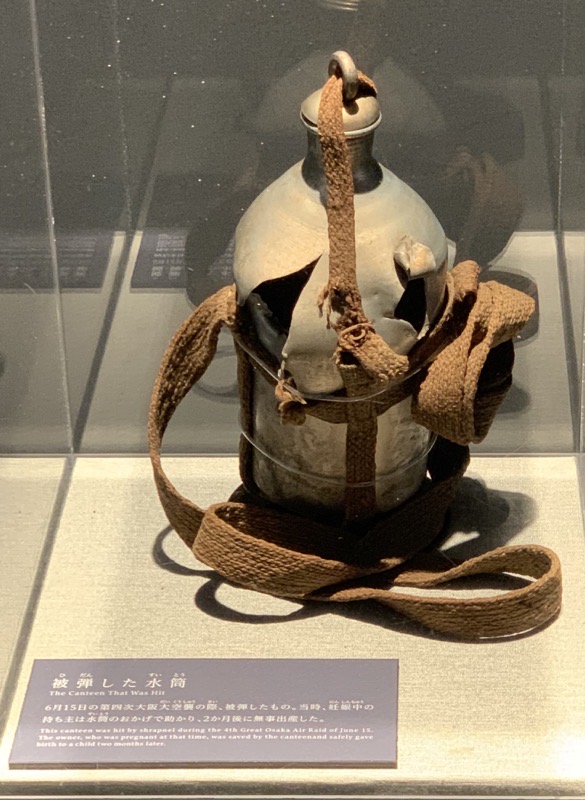
This canteen protected a pregnant lady by catching the shrapnel for her. It was the first thing we saw. What a start.
Those particular moments, on those particular days. Why Osaka? I thought it was a weird, or loaded question, but it’s a good one. They answered it, in a way - why Osaka was targeted.
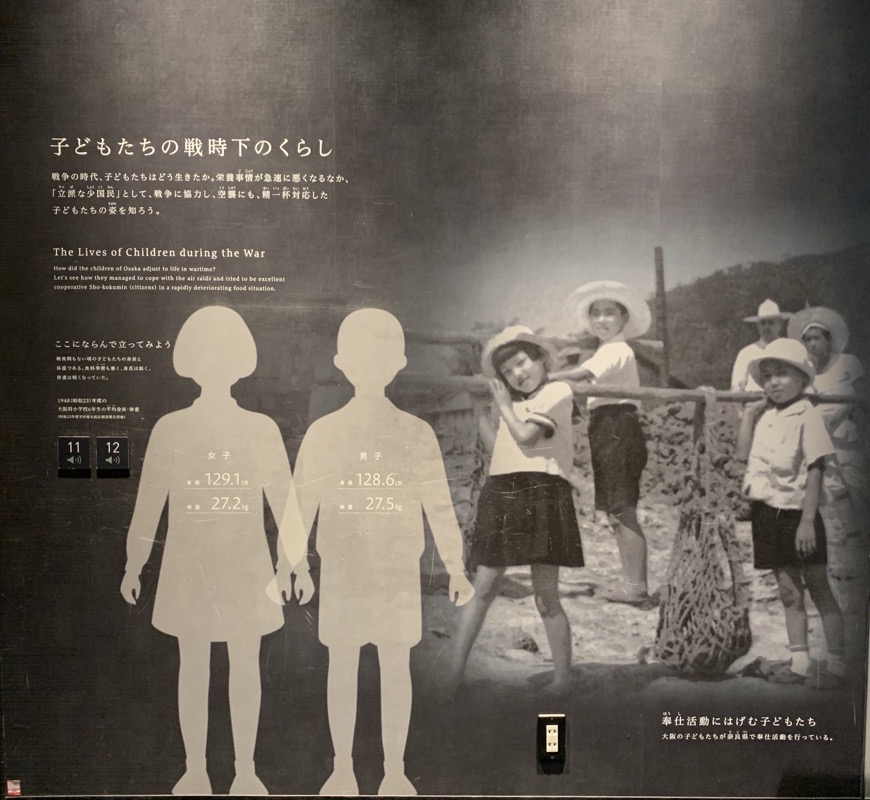
The effects on children during war were discussed. From the malnutrition’s affect on height (but no mention of the pre-war heights to give context):
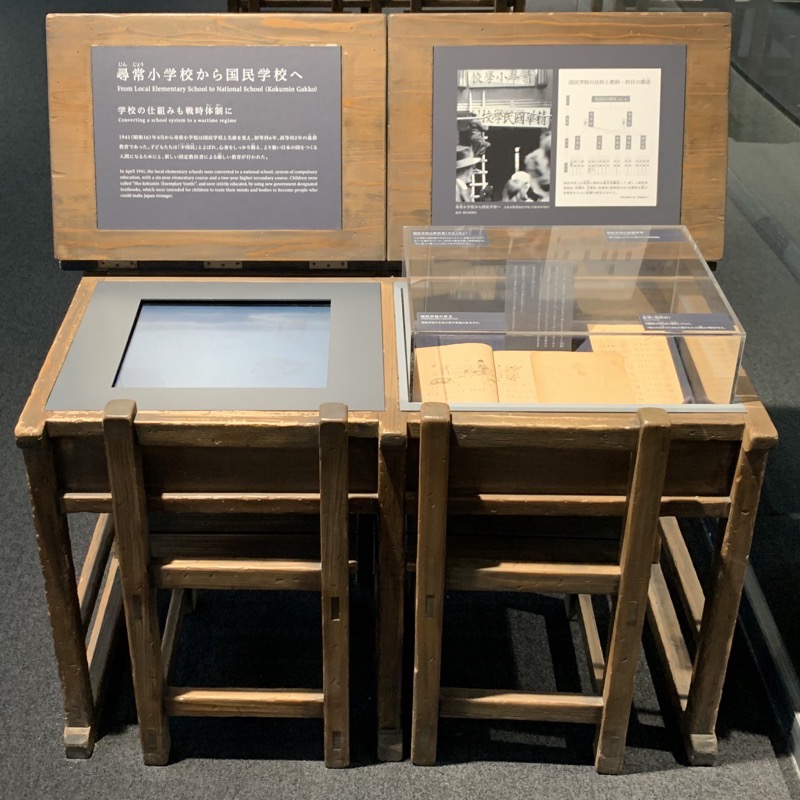
April 1945, children were pulled from school to work in the war effort, the country truly was in total war.
At Tennoji zoo, there were a whole cohort of animals terminated due to fears of them escaping during war, or starving to death. Sep 23 every year a memorial service is held for the innocent creatures.
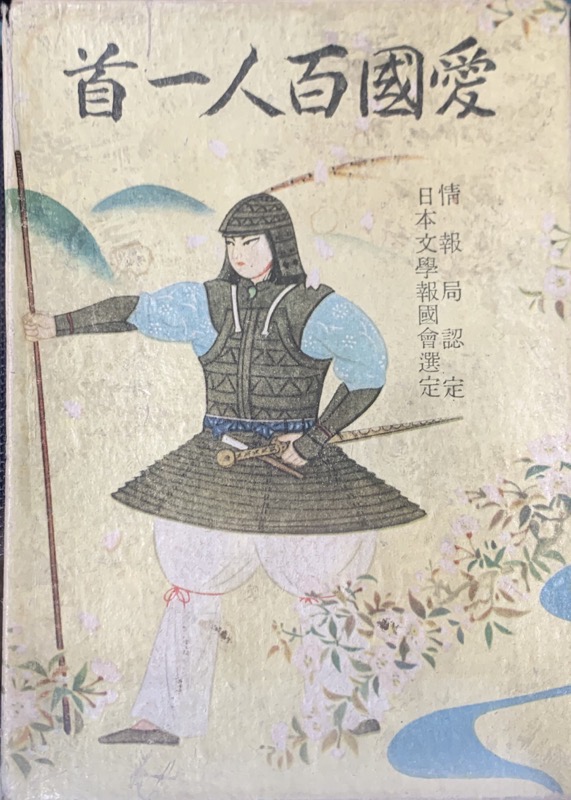
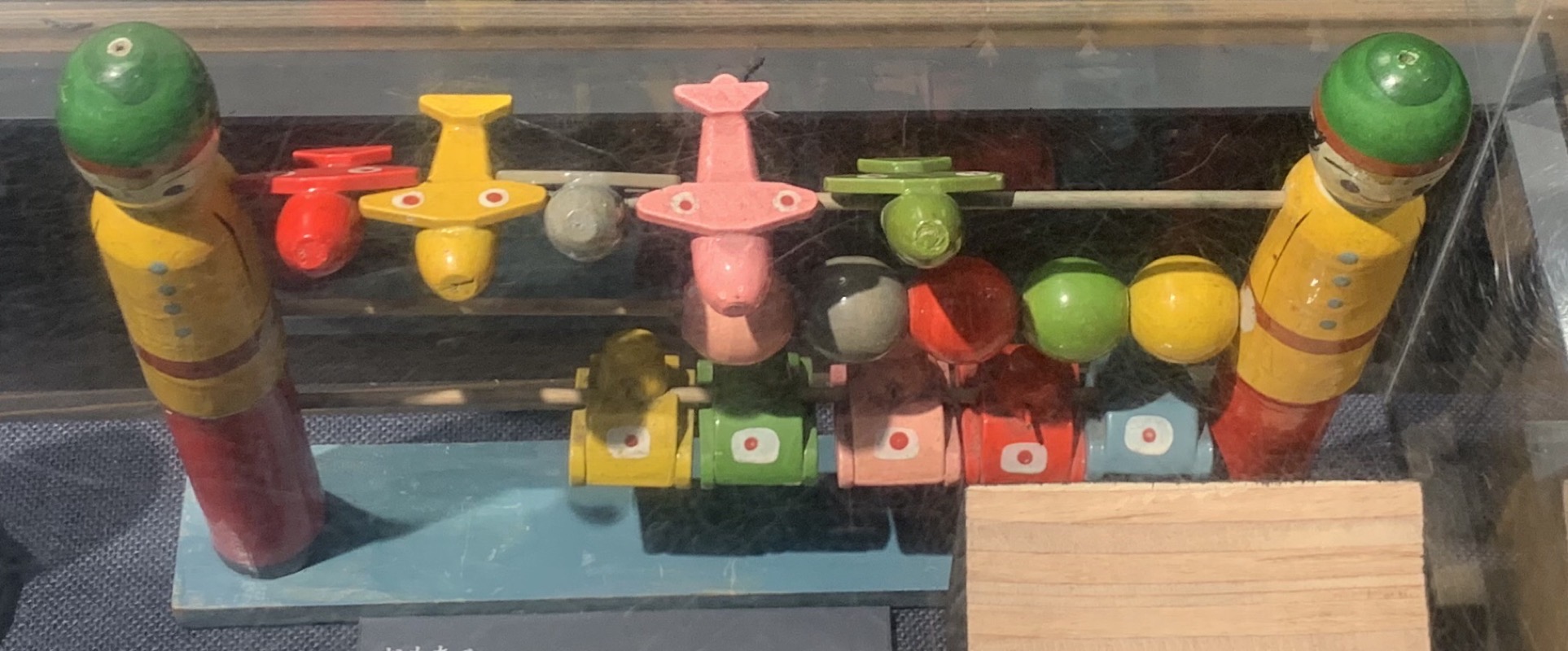
They promoted the concept of the “Sho-kokumin”, (exemplary youth), children who worked in the factories and the war to help the war effort. There was a lot of psychological tricks to help morale.
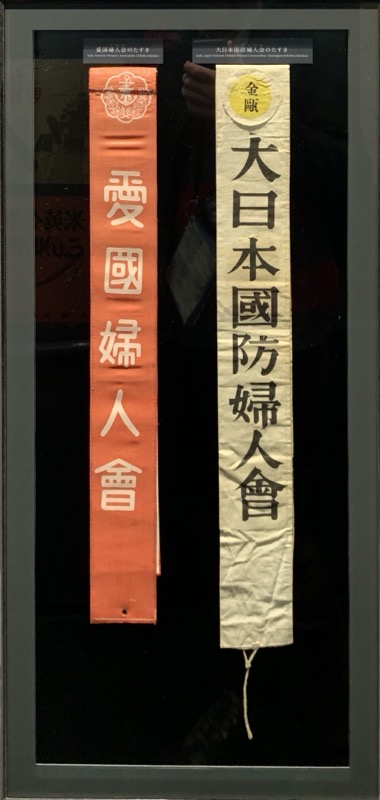
The National Defence Women’s Association was first established, serving tea to soldiers in Osaka leaving for the front. Eventually they took part in air defence measures, wearing the kappougi (Japanese apron) with a white sash as a uniform.
Citizens being involved in the air defence strategy and hometown defence was a massive thing. Heavy preparation for fire was a big focus, since the cities made mostly of wooden structures.
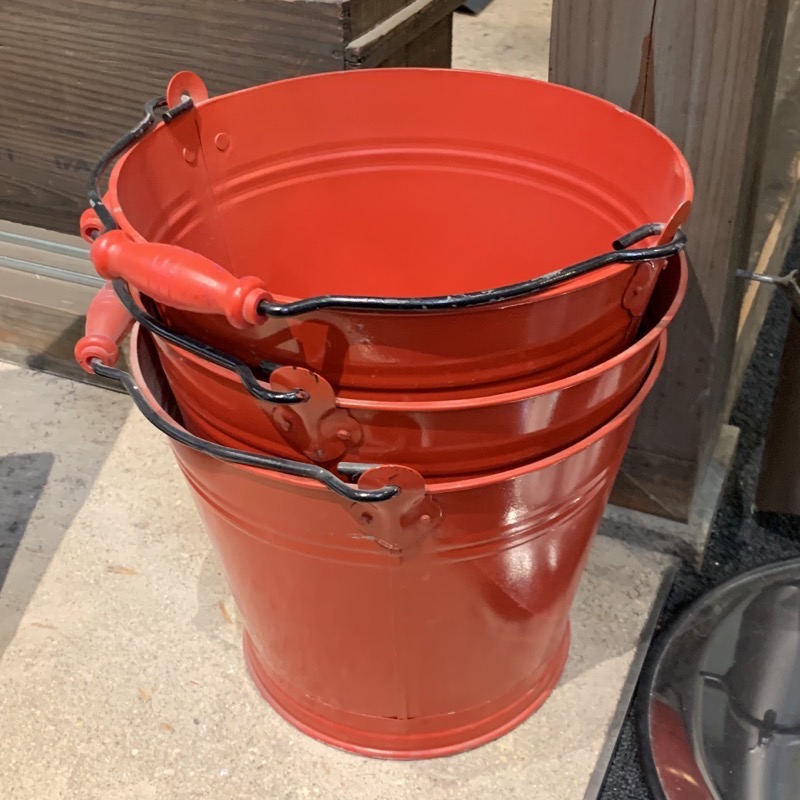
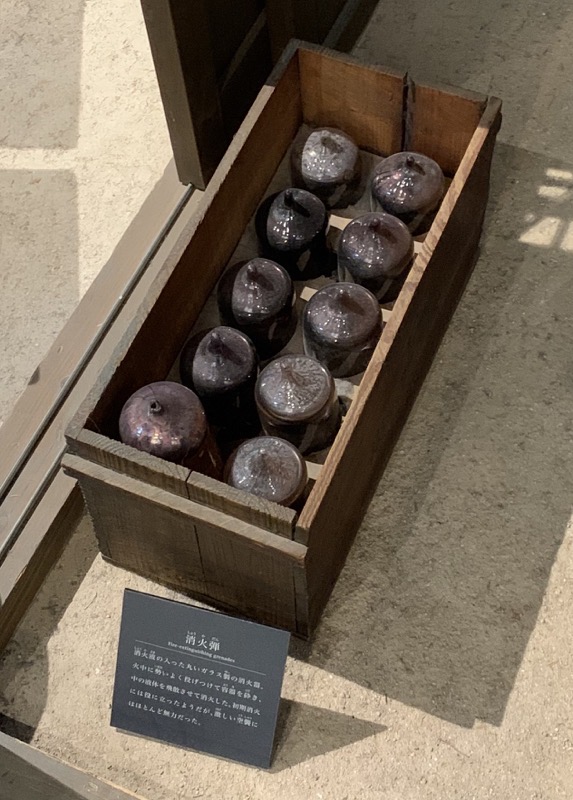
This made me think it’s a necessary move for us at home, with the incredible bushfires tearing through our country.
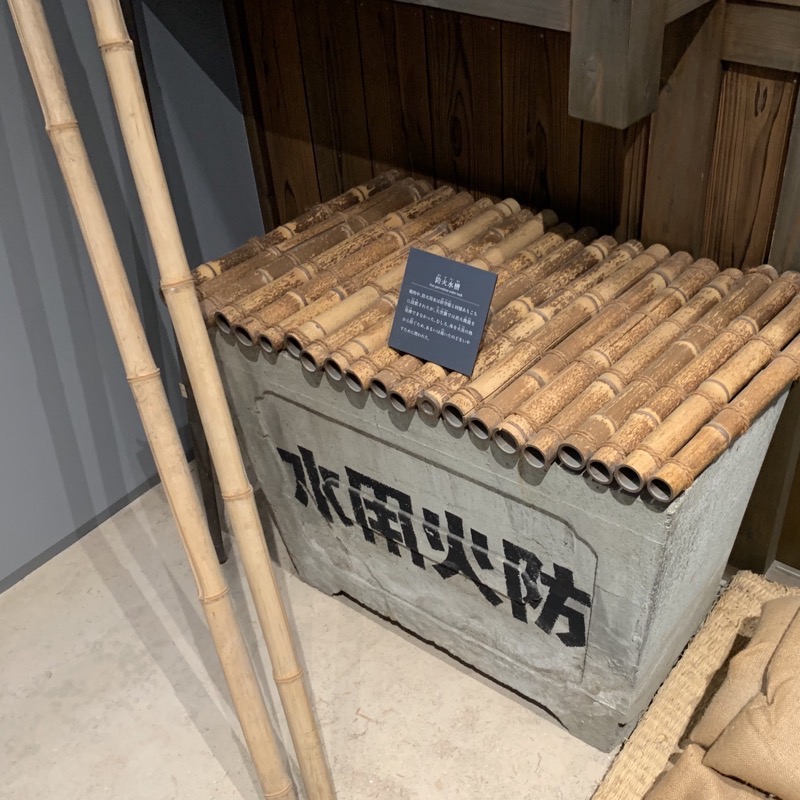
The government nationalised the neighbourhood associations in 1940 to instruct and control citizens’ daily lives. Language and actions were heavily censored to limit dissent as helping with the war was their duty.
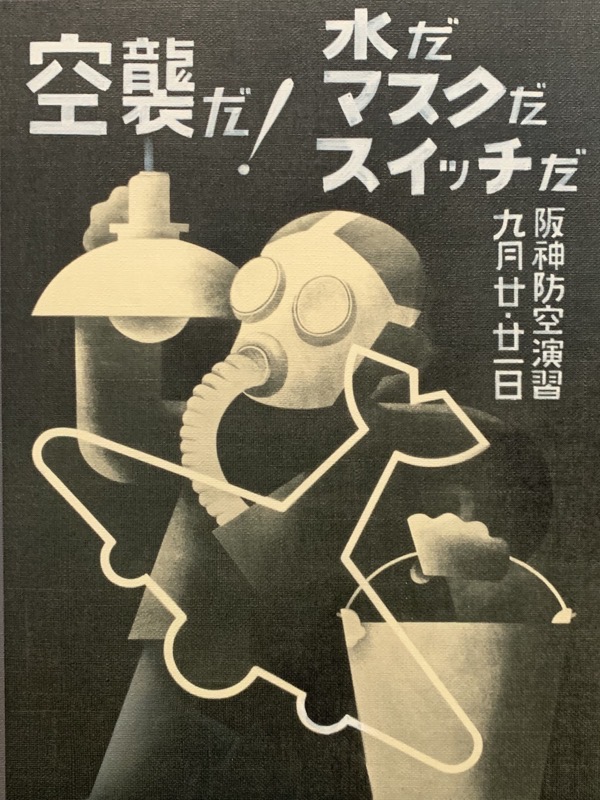
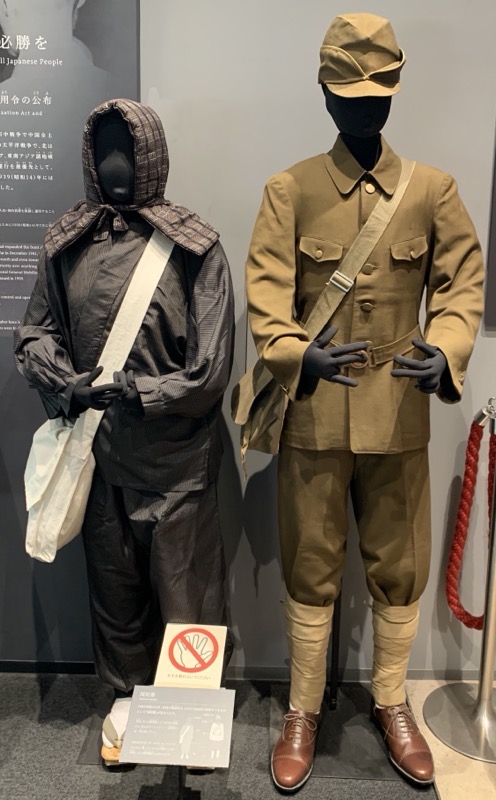
“Luxury was an enemy” became a common thought. The national uniform was established during rationing. Rice and any other resource would be strictly controlled by the Diet.
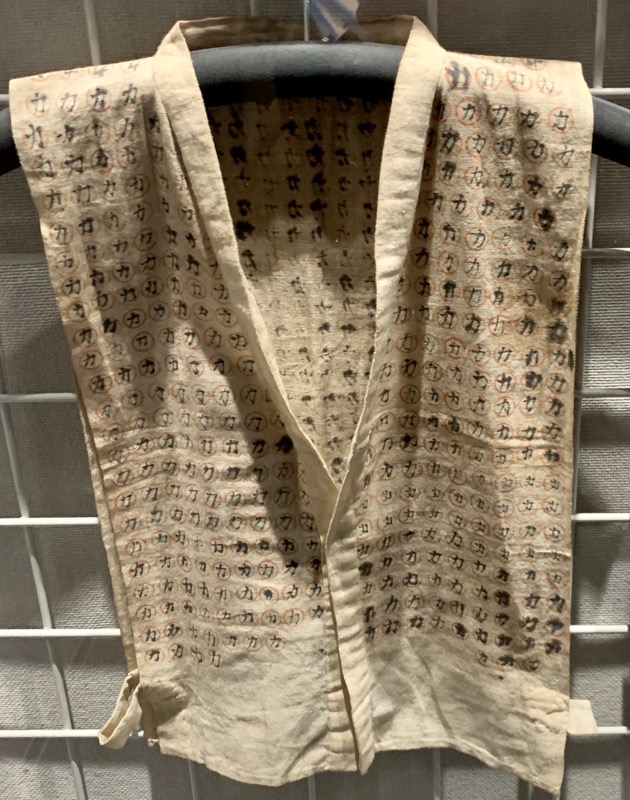
There were some remnants of the war, with good luck charms of different sorts. This vest has か (power) written over 1,000 times.
The destruction and the bombing campaigns
The basement level was a look at the direct effects of war, on the people and the buildings they hid in.
There was a small alcove called “The Testimony Room”, which had a loop of nine moving stories from survivors of the fire bombing of Osaka. Most of them were children or young at the time and their stories are pretty tough to listen to.
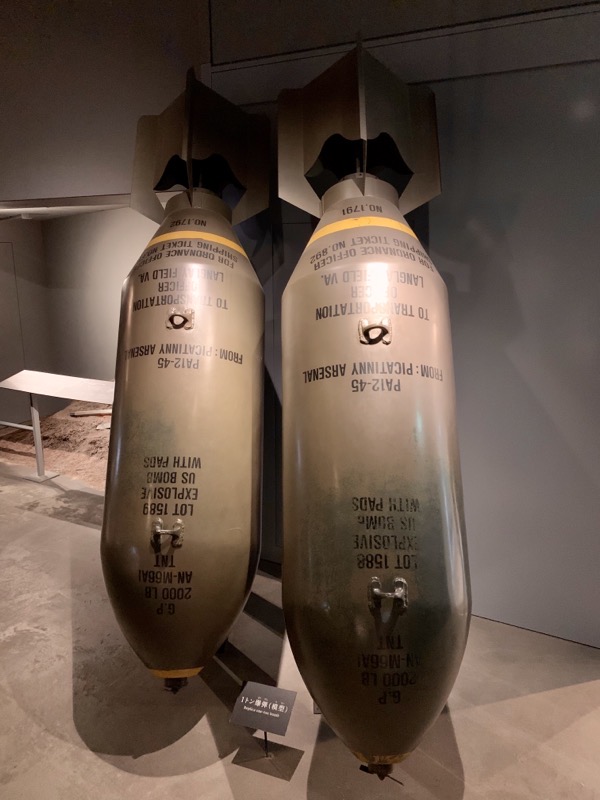
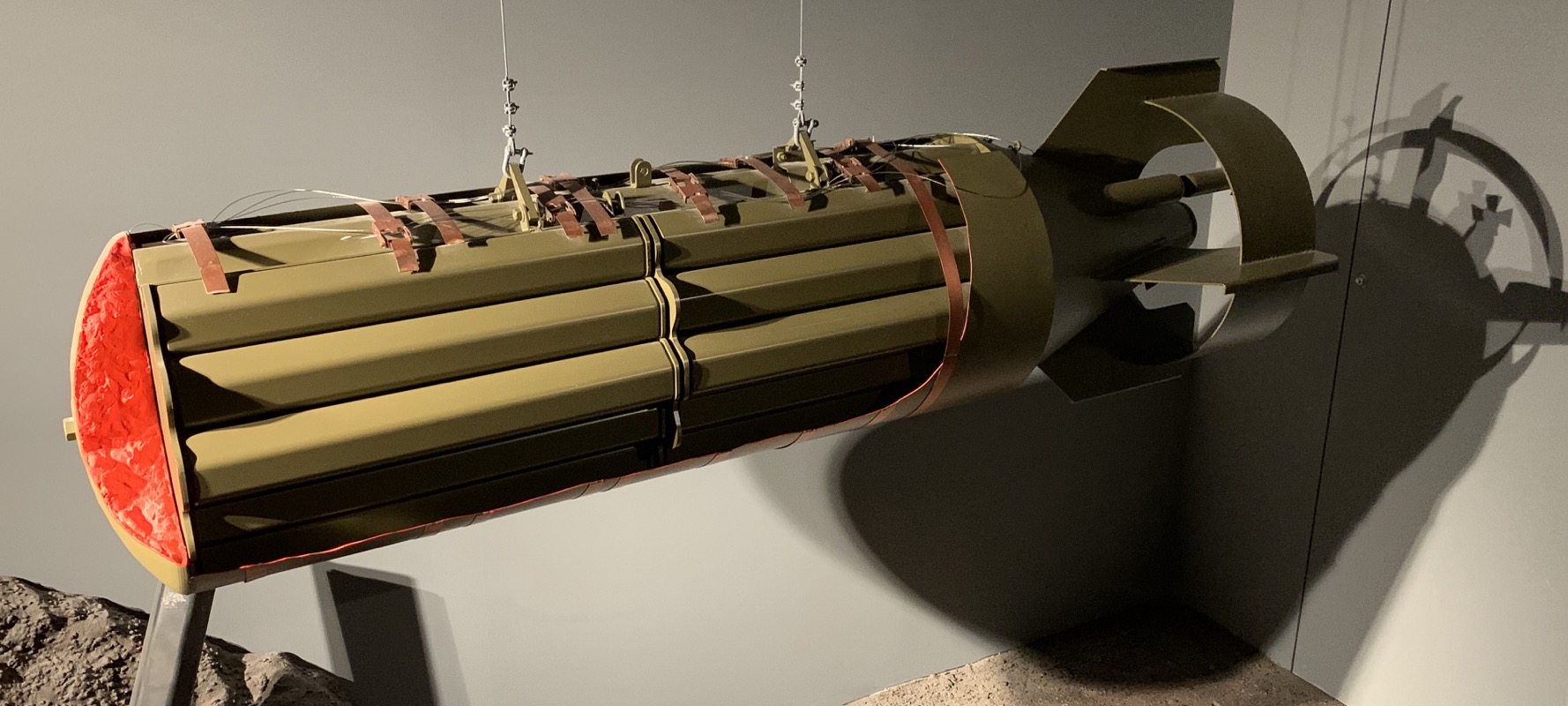
There were replicas of the truly massive “Pumpkin Bombs” which were used both to create incredible destruction, but also designed by the Manhattan Project to train the B29 bomber pilots for delivering the nuclear warheads to come.
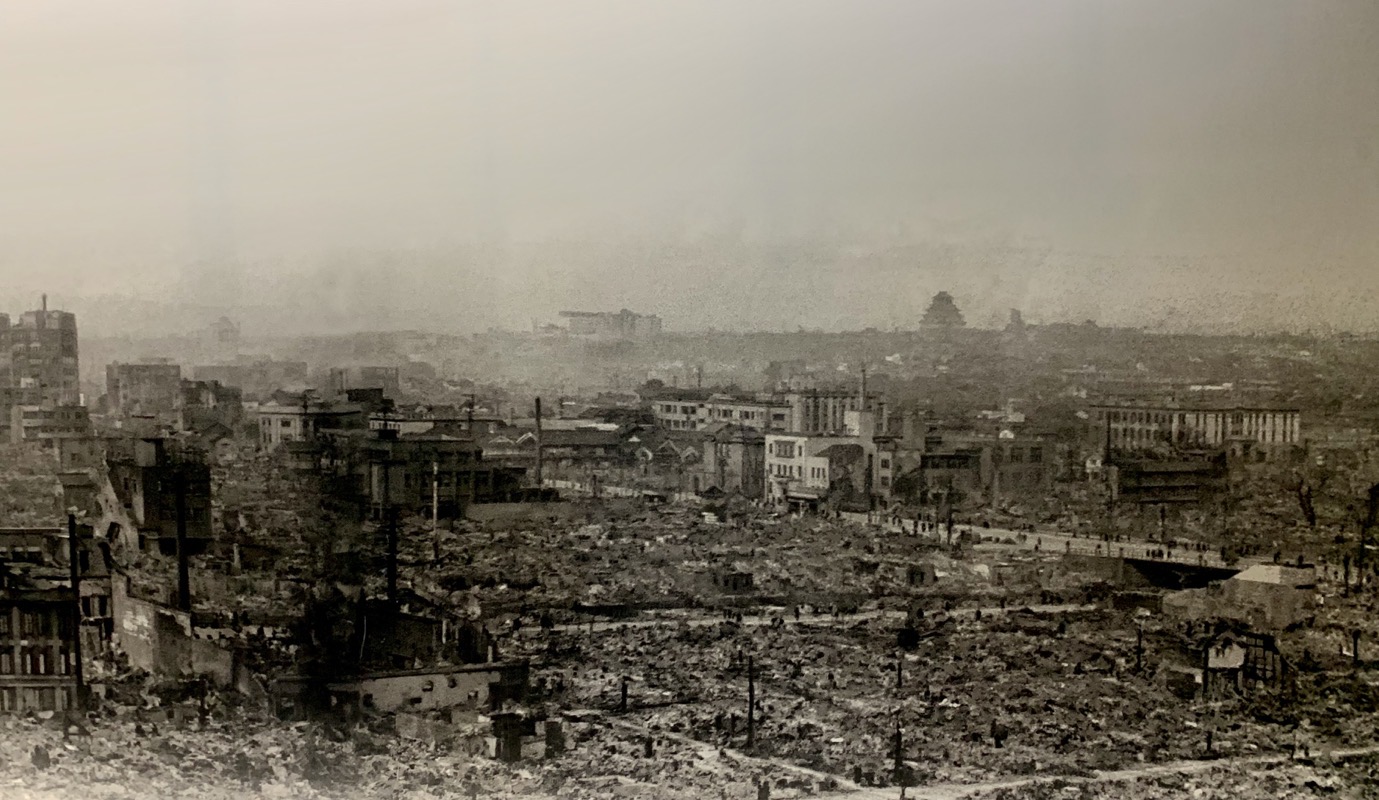
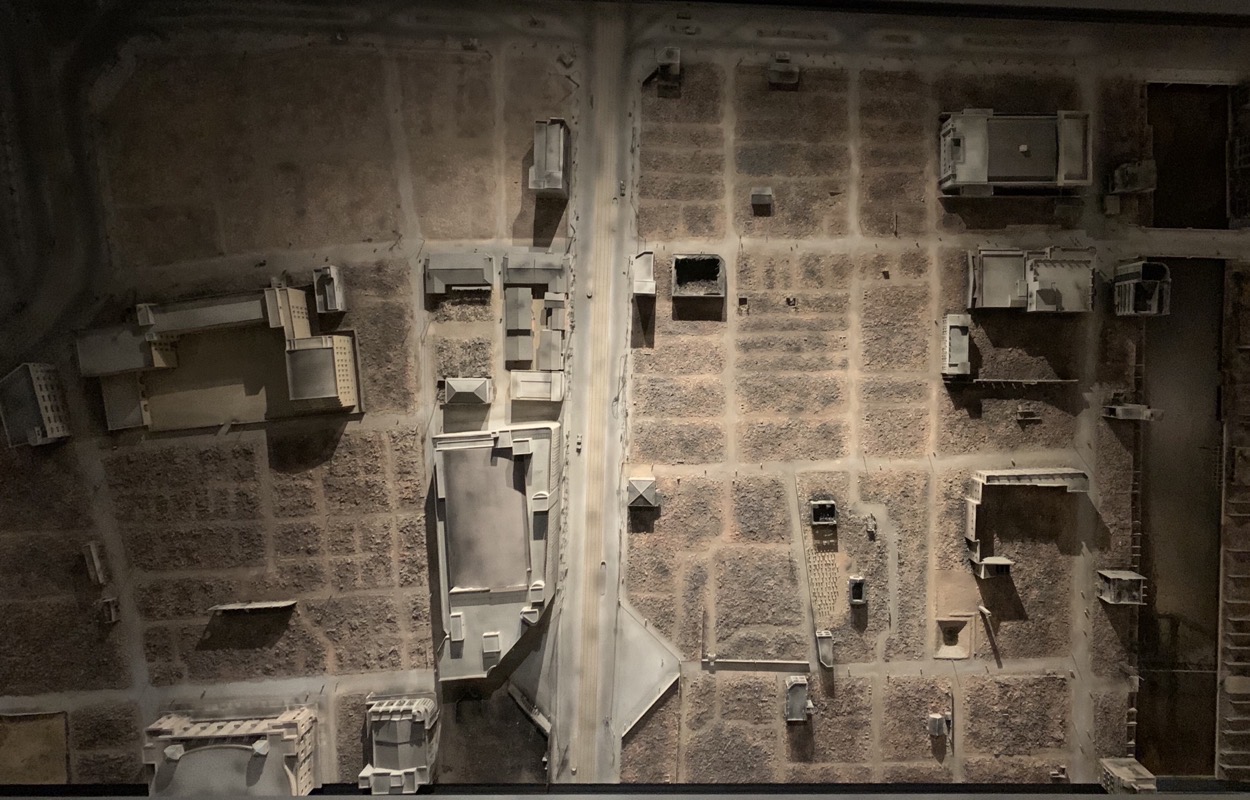
They had huge diorama of the Minami district, the now bustling shopping and pop culture area shows the Dotombori river on the right. After the first air raid it was razed to the ground, a blank canvas.
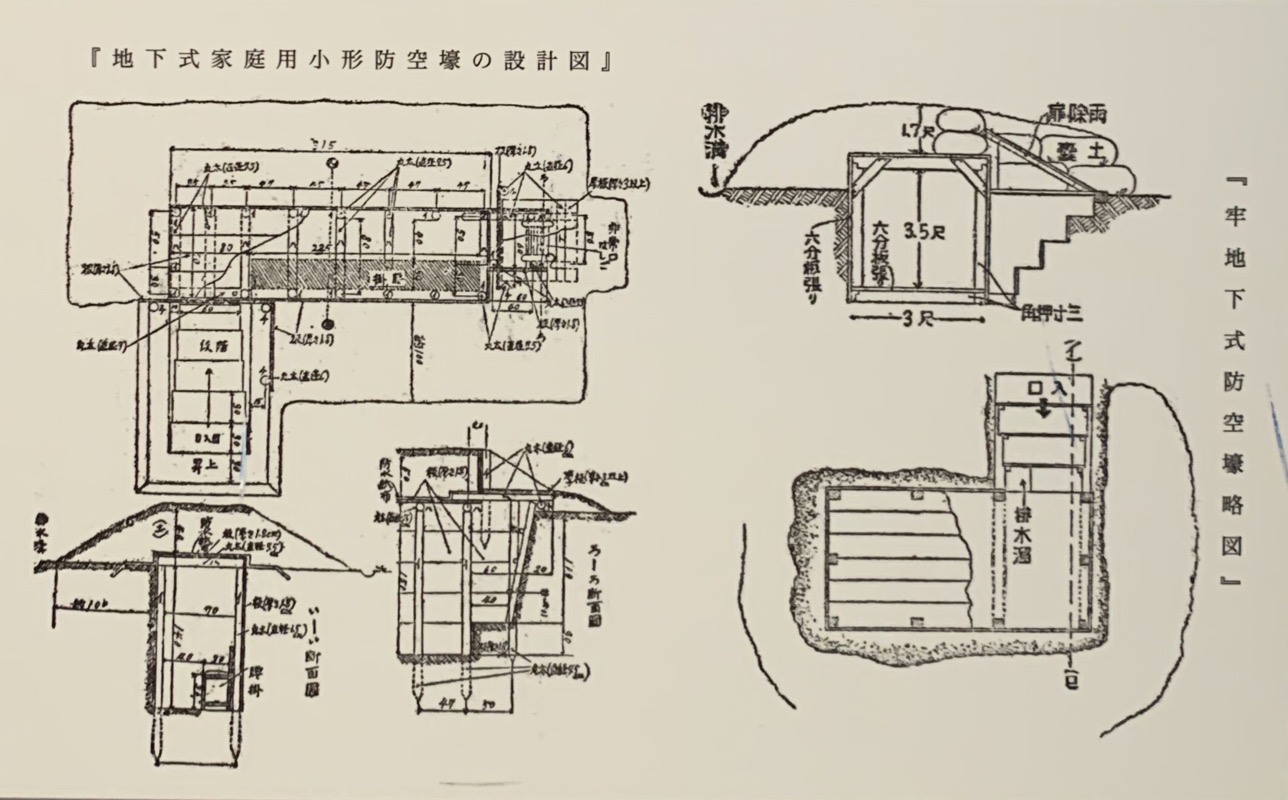
Air raid shelters were built by households and cities alike, many built their own out of bamboo and mud. Many collapsed, and since they were lined with wood they typically burnt or steamed their occupants alive if a close hit from a fire bomb occurred.
Osaka regains its vigour
The Reconstruction Bureau was started in September 1945 and had five main plans for the city:
- Street improvements to maintain traffic order
- Park design and space allocatin
- Housing allocations as people were homeless
- Railway maintenance to improve industry and public transport
- Development of Commerce and Industry around the port of Osaka
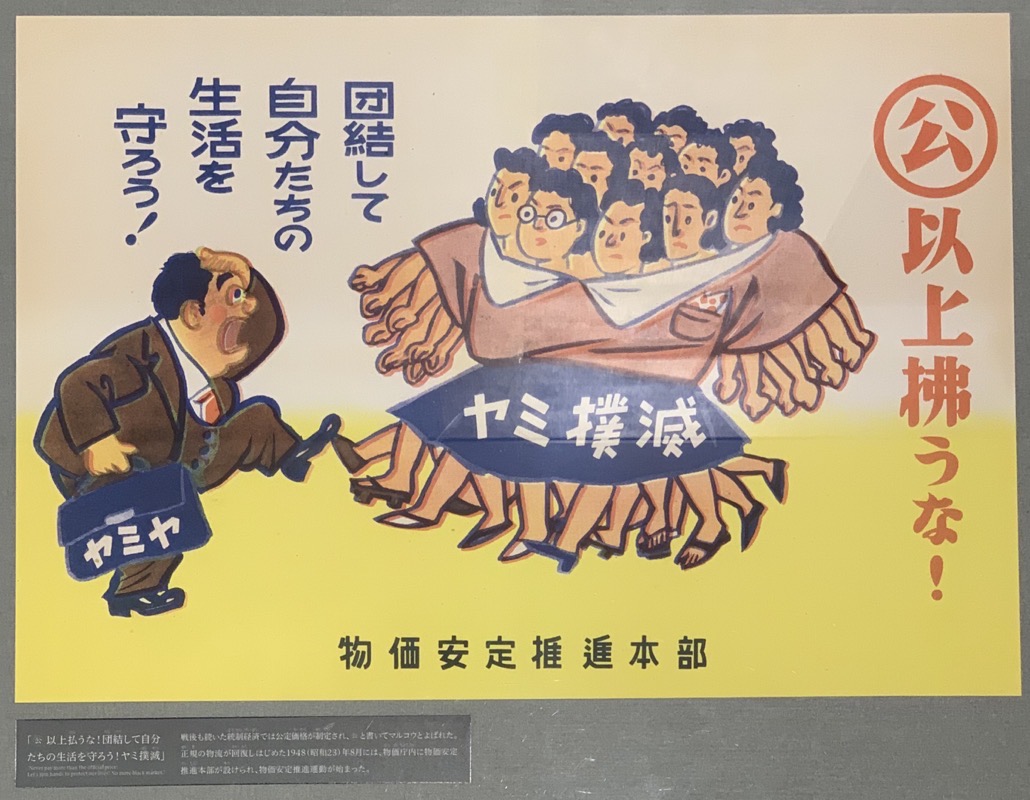
During the Allied occupation and management of the country, there was heavy black market activity and selling of possessions to get basic food and supplies. It was typical to carry heavy packs full of things to sell. They had an example of a pack to see how heavy it was, weighing about 19kg.
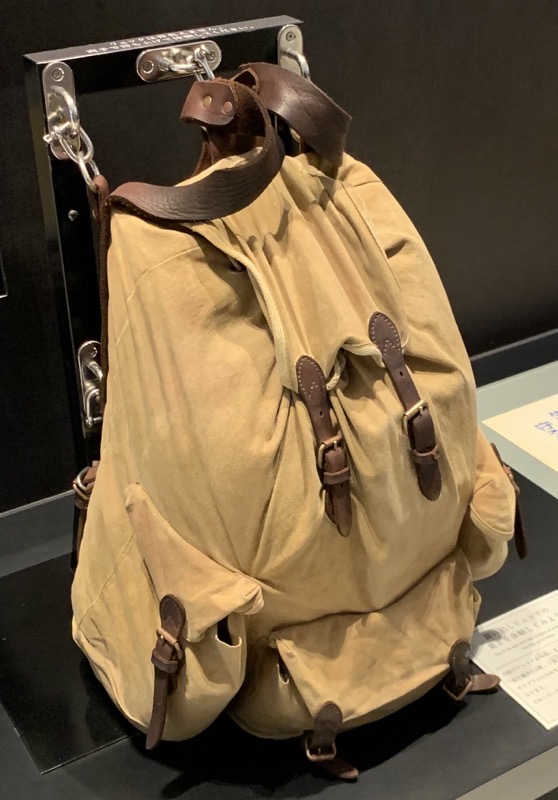
Wash your hands else you’ll get dysentery!
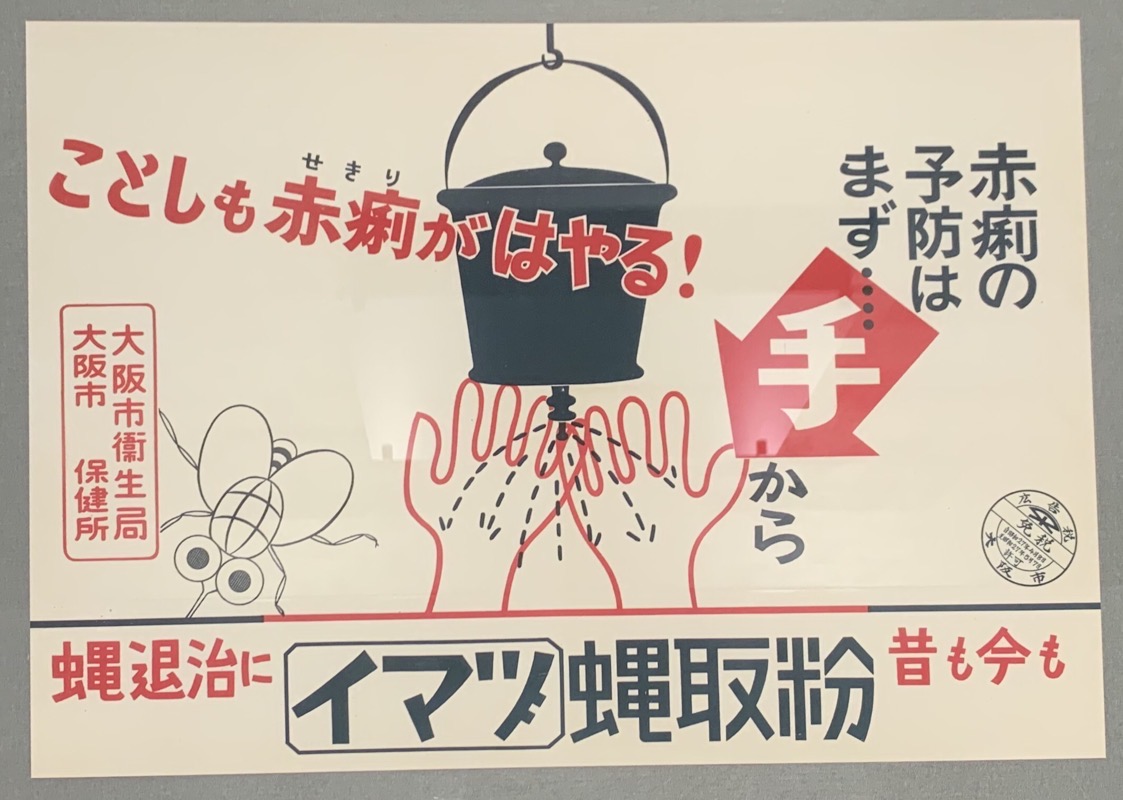
It was typical for post-eat citizens to be Living in barracks or even dump trucks reused as housing. Anything you could live in as shelter was fair game.
There were many examples of injuries of war survivors and there was talk of the pensions for war injury sufferers.
Elementary school numbered 277 before and 190 schools after the war. The fundamental education law brought forth massive change, provided education and supplied lunch for the students which was important in this time. An example lunch was shown; a bread roll, vegetable soup and skimmed milk.
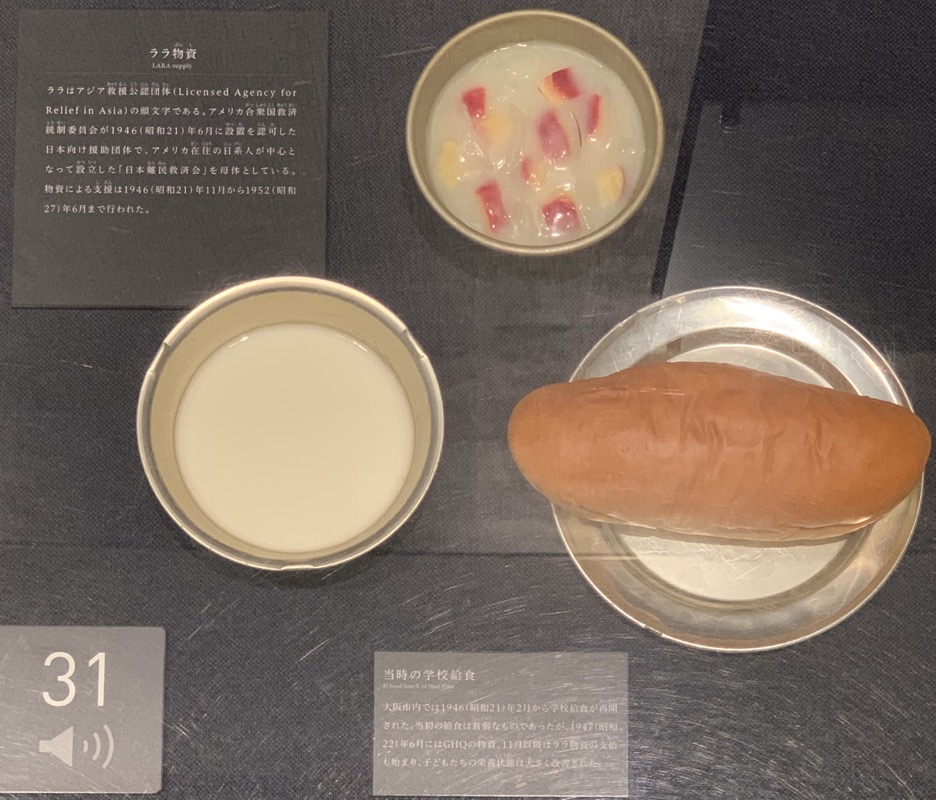
They standardised education for all students, heavily redacted previous school books, removing all military education from exisiting books as they previously pushed a heavy military agenda.
There was a lot of public events to improve and maintain morale.
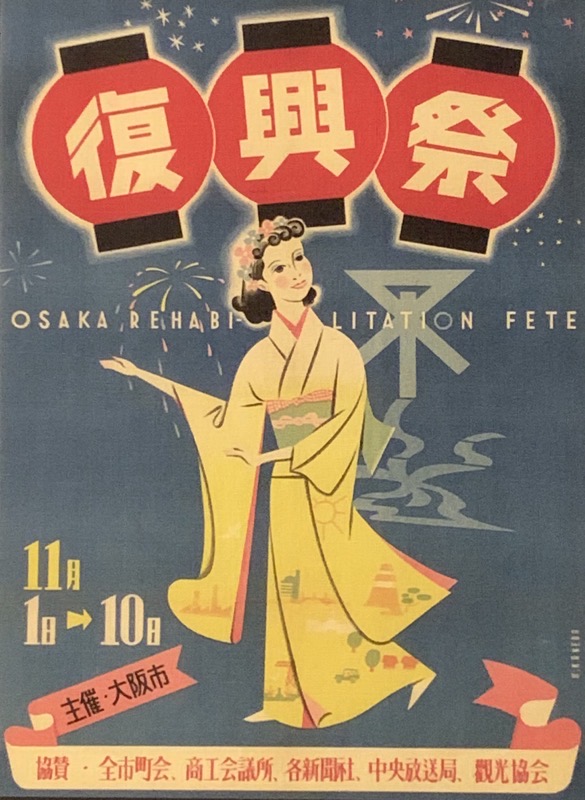
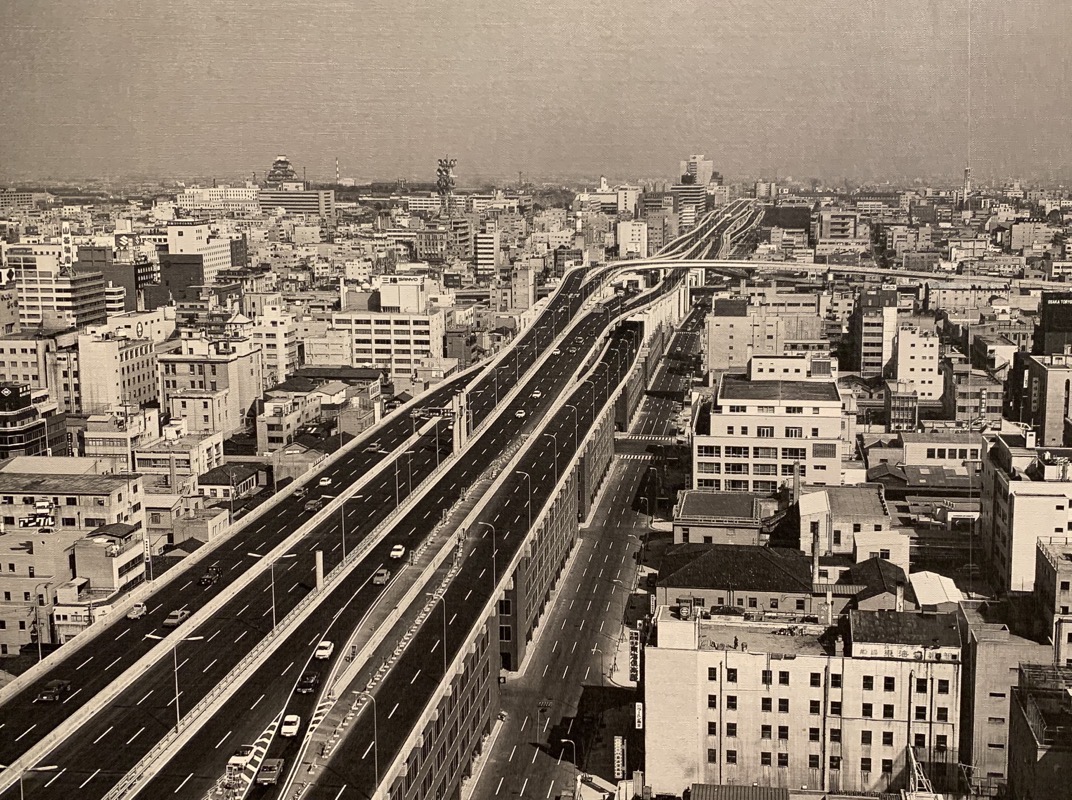
1952 came and the occupation was as over. Economic development started and the first television was produced, paving the way for a massive electronics industry to be born.
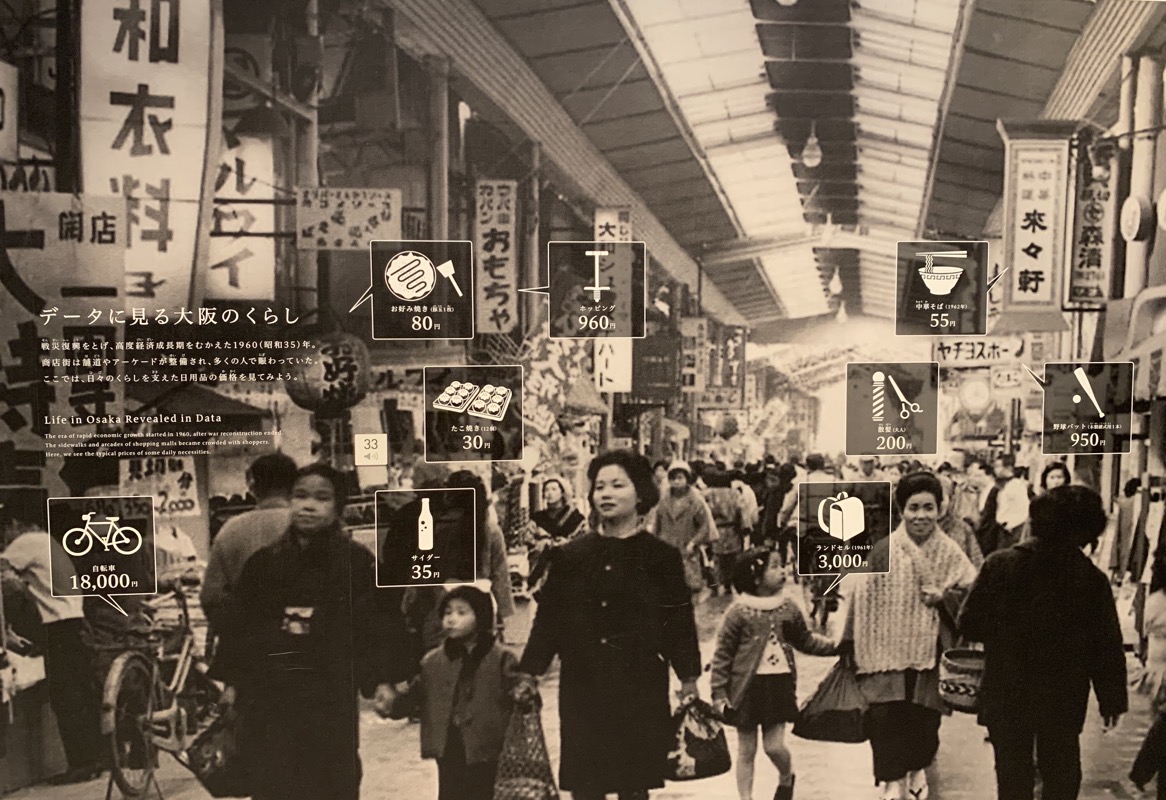
Osaka is known for takoyaki, 30¥ was the price for a half dozen as the time, but pay was 1/15th of current rates. Costs were higher, especially for things like clothes which weren’t easily mass-produced at the time.
Ensuring a peaceful future
This section was talking a lot about how the world is still not peaceful, and how Osaka and the rest of the world can look towards improving outcomes for everyone and working for peace.
Osaka’s interactions in the international community - showing their worth by reputable international cooperation instead of military strength.
They acknowledged the reality of the fact that war continued, and still does today, with examples like:
- Cold War
- Vietnam
- Post Cold War period, 9/11.
- Today (relevant given the US antagonising Iran)
In search of peace, use your imagination and think what we can do.
- Donations
- Volunteering
- What else?
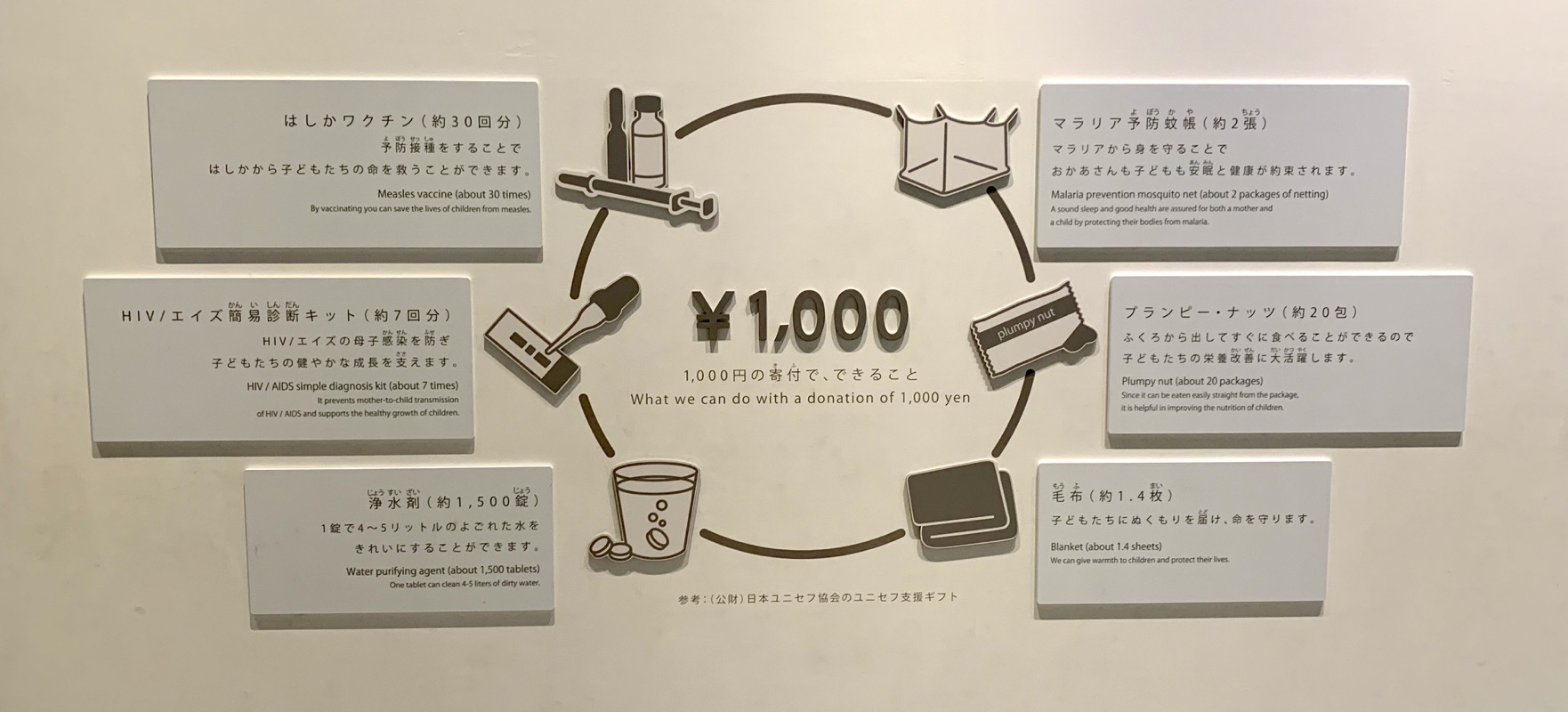
Peace initiatives, such as the UN and NGO’s. Consider what Osaka can do for the world.
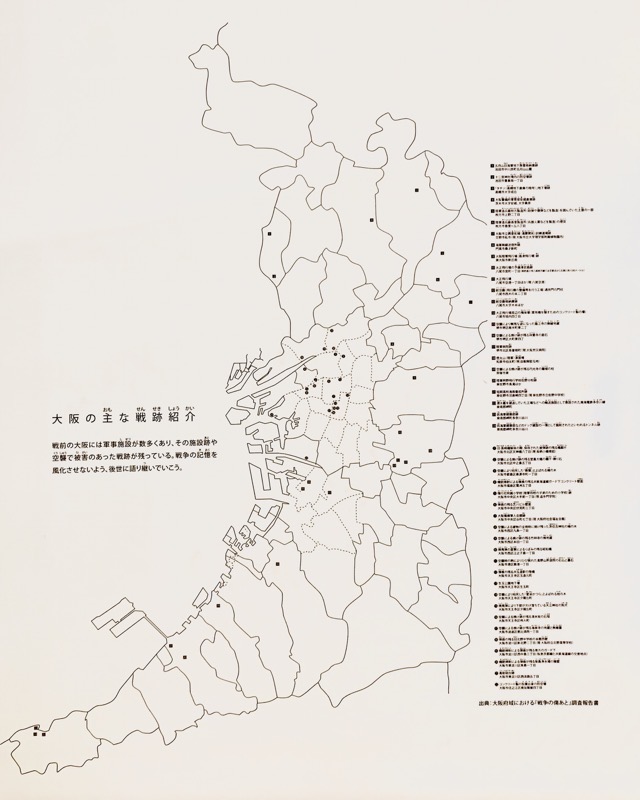
The scars of war remain, and so do the war facilities. We should visit them and recognise their benefit and cost to the society.
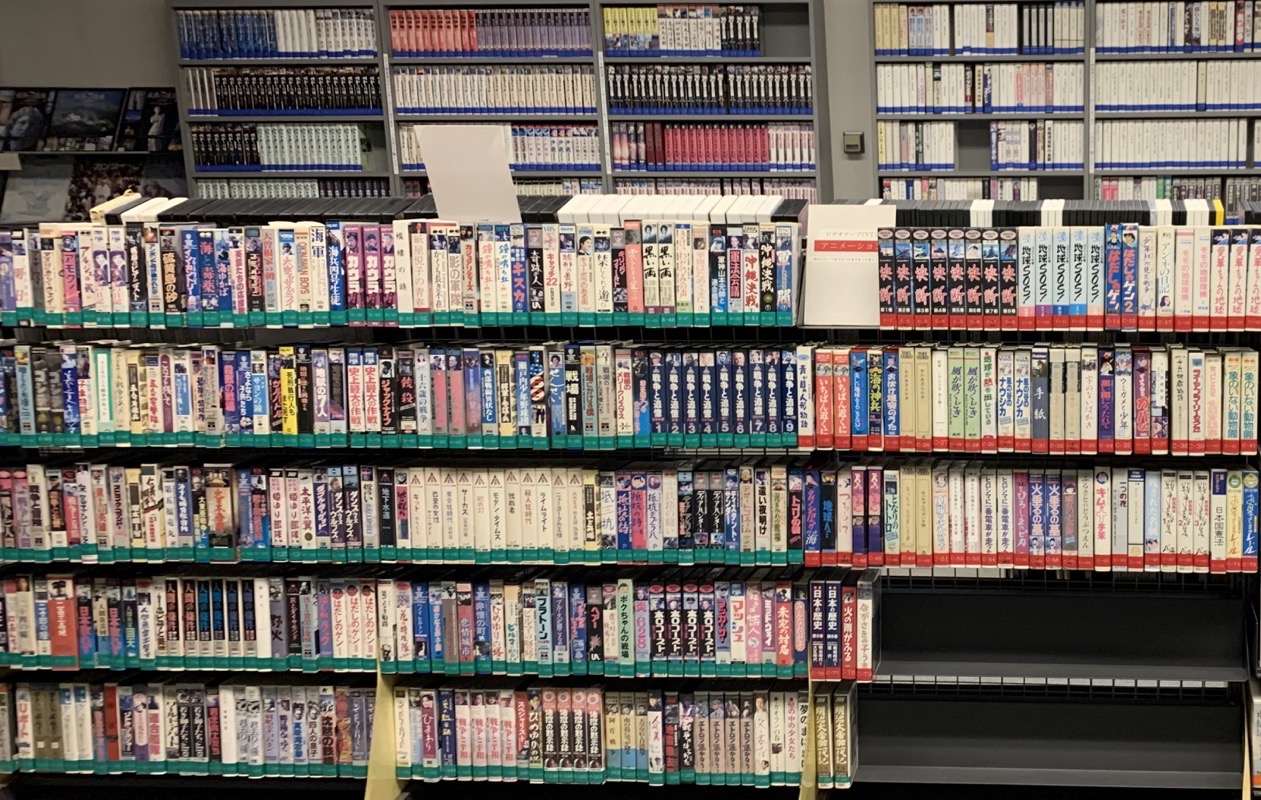
There is a viewing room with a large collection of videos about war and also peace to watch in private booths.
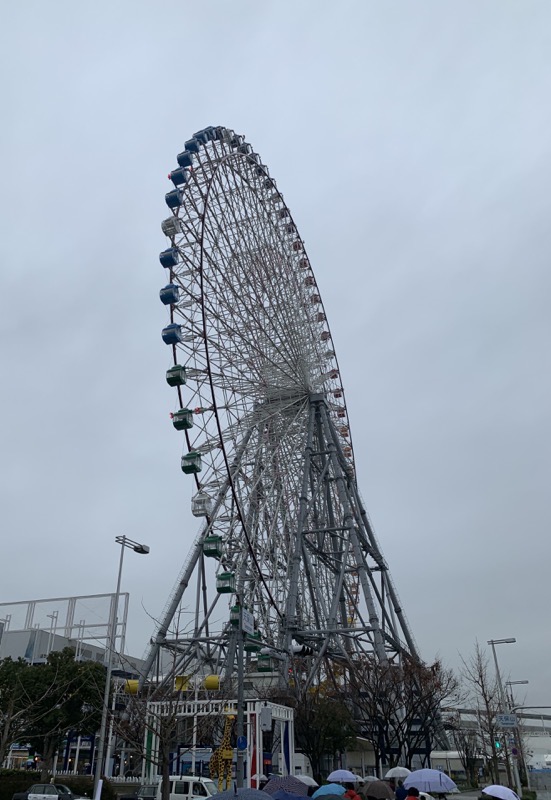
We walked out of the museum to the sounds of multiple big helicopters and a marching band. Curious? We couldn’t find it, but guessed it was over near the front of the palace.
Off to the aquarium! It was a pretty bleak dat weather wise.
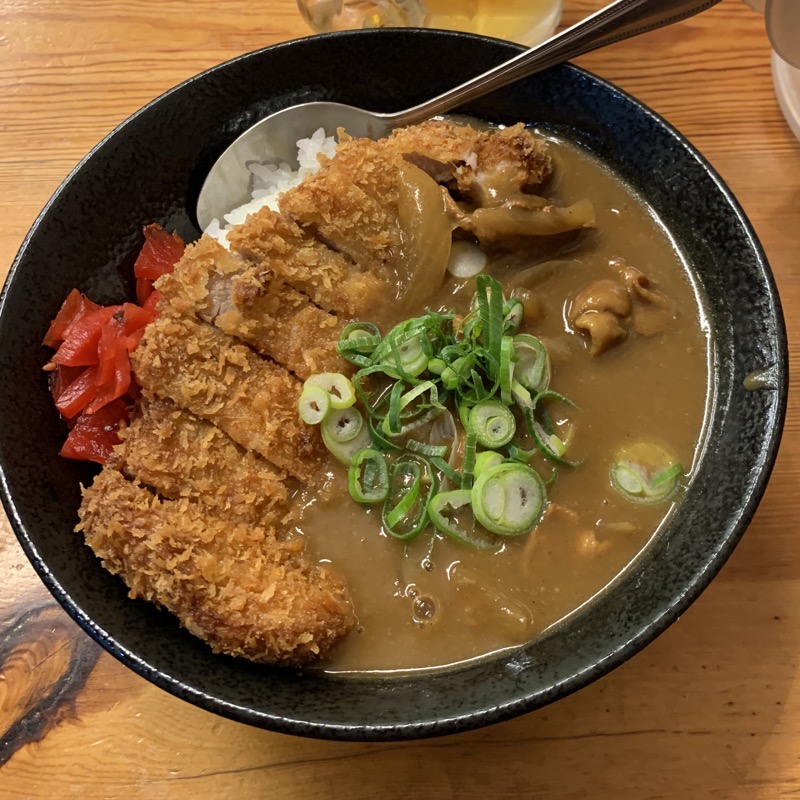
Before exploring the fishy world, we hit up lunch at a random place in the Tempozan mall next to the aquarium. I really need a tattoo that says “I can use chopsticks” I actually prefer them in most cases.
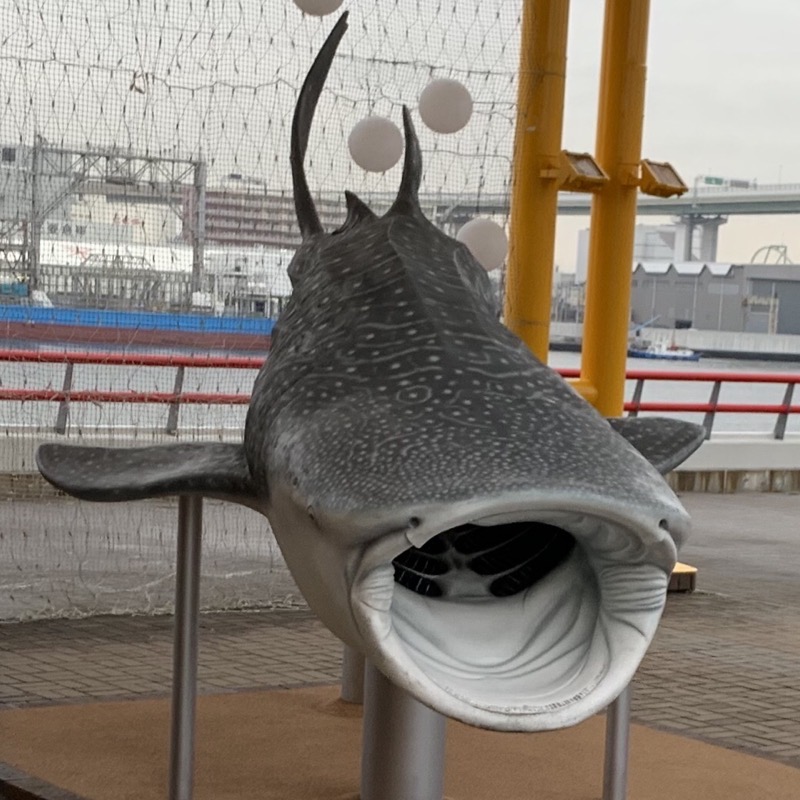
Ok, now off to the aquarium. Tickets in hand we went through the gates. There was this weird shark thing that you could take your photo with, and as we walked up, a teenager’s butt was hanging out of it like the person had been eaten. I waited for removal of the kid, and here’s the shark. Neat photo opportunity.
First up there was a tiny plexiglass tube thing where people were inside and fish were outside. It made me think of the one in Queensland, but lower budget.
Otters snuggling. This is all we saw of them, because it was freezing cold. I didn’t mind one bit, this is precisely why I love otters. Snuggling.
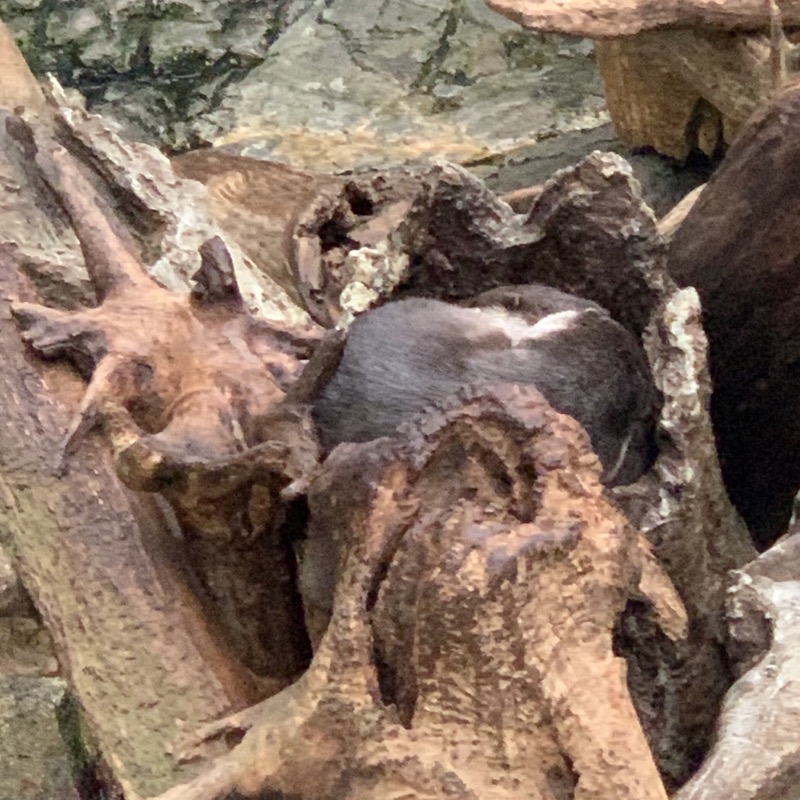
The Japanese Salamanders were hiding too.
So many other things to see. It was an increasingly great aquarium as you continue through it, spiraling down through the complex without even realising it.
I finally got to see a not-stuffed Puffin! The Aleutian Islands tank had Tufted Puffins which were mean little buggers.
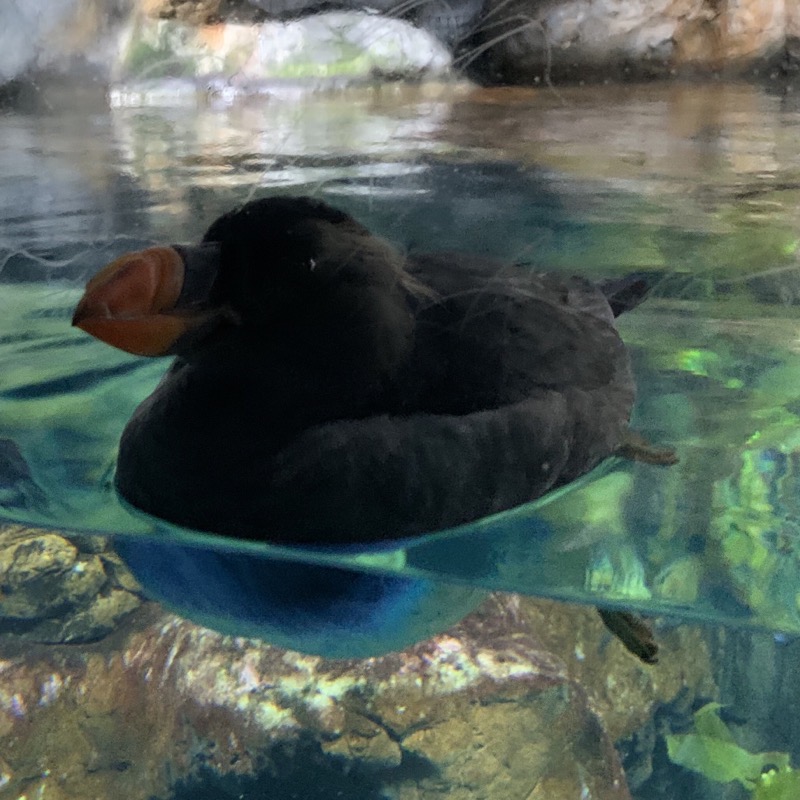
It was a great day for sleepy animals.
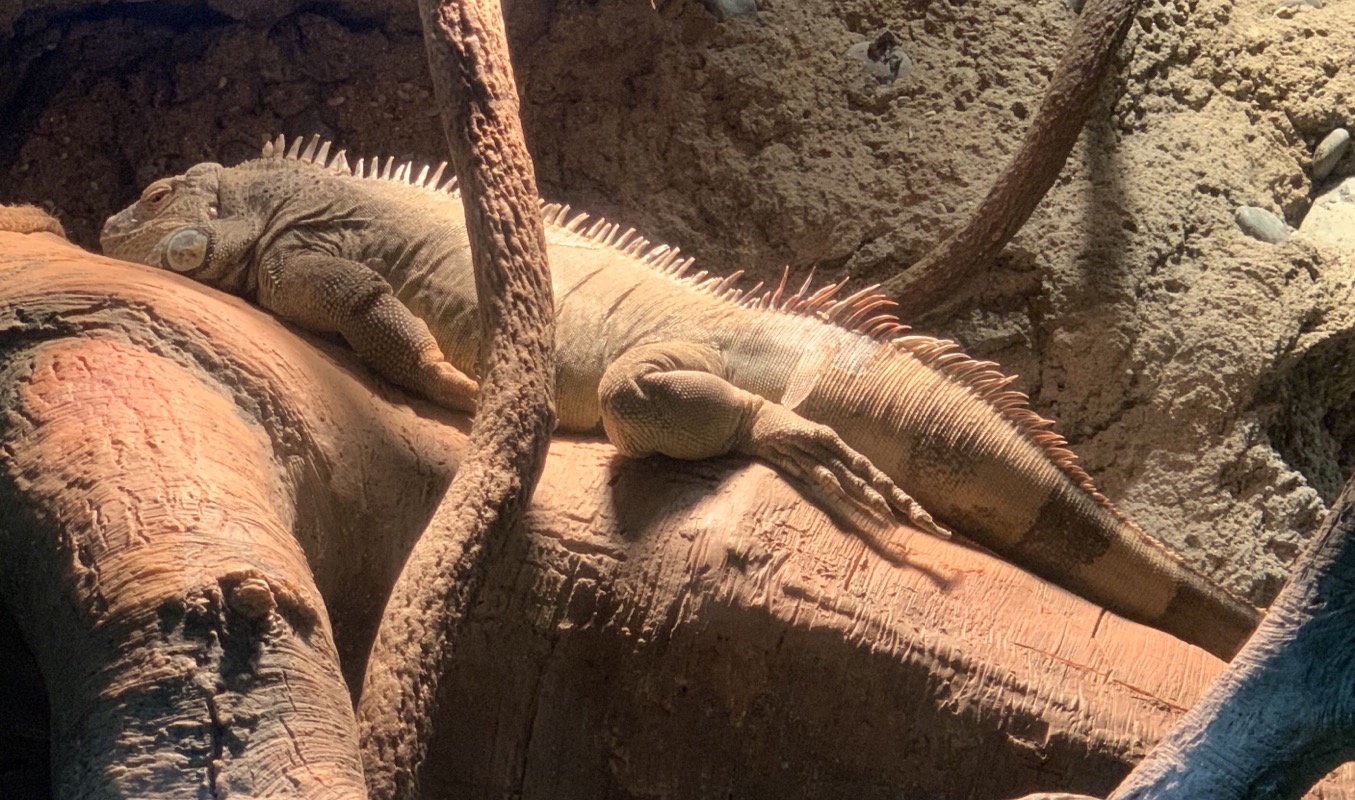
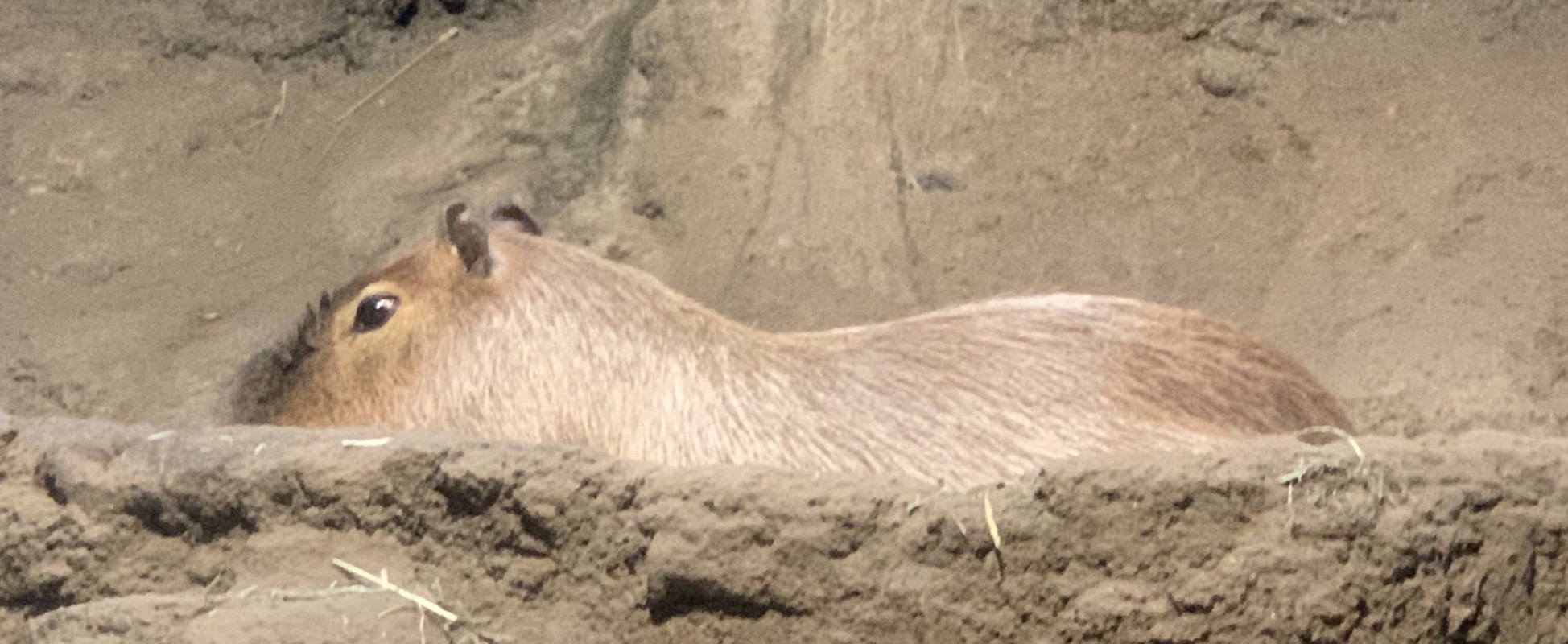
The capybara didn’t want to know any of us. I lost a staring competition with it. I’m still not sure if it’s ever blinked.
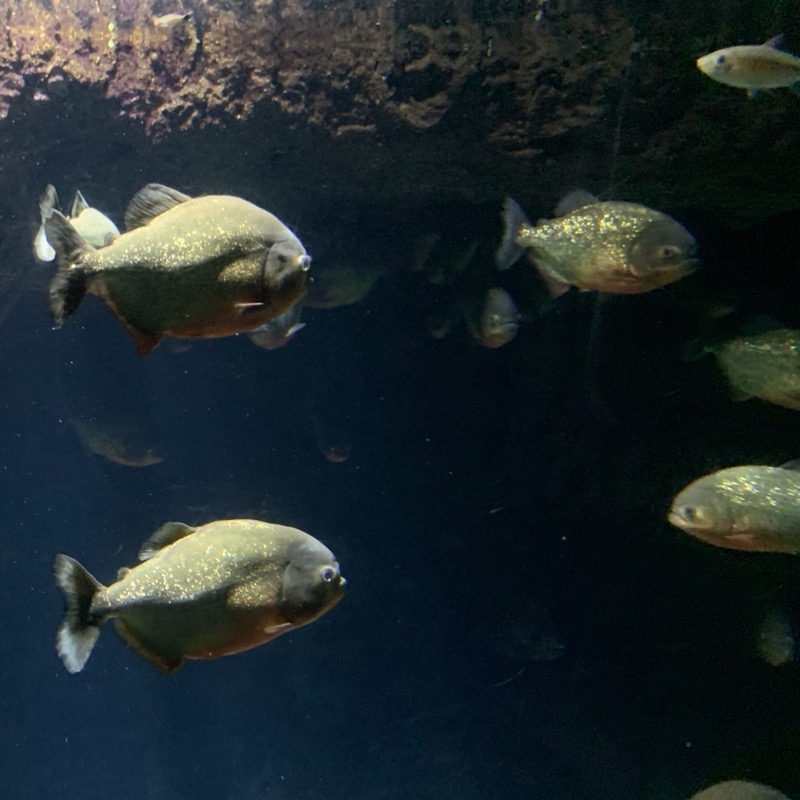
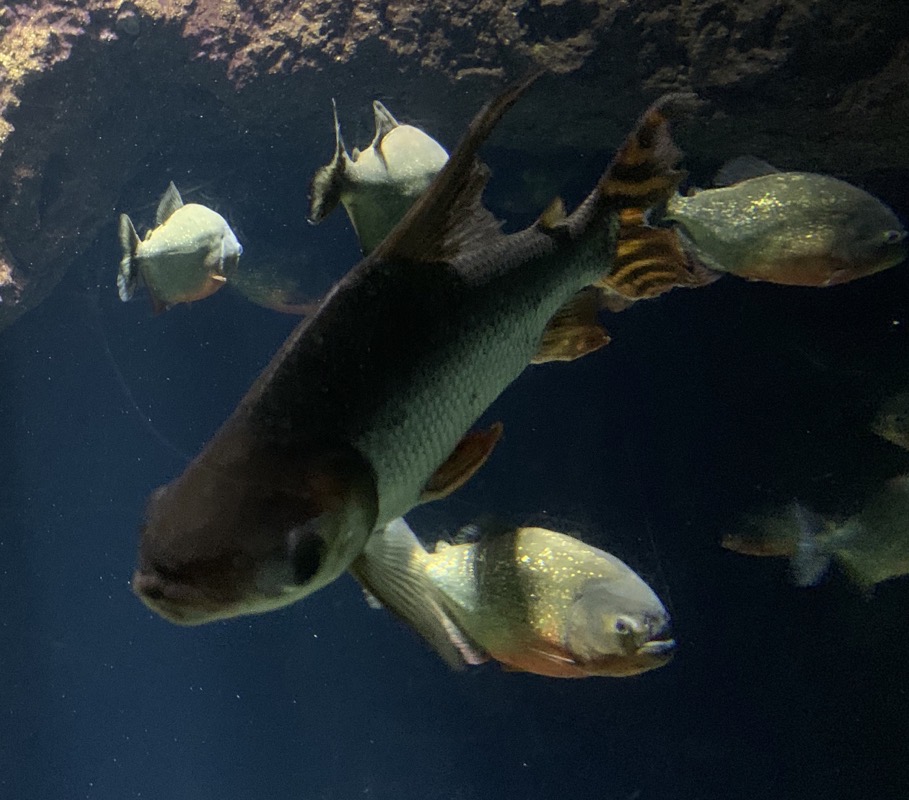
I’d be careful too, with this many piranha around…
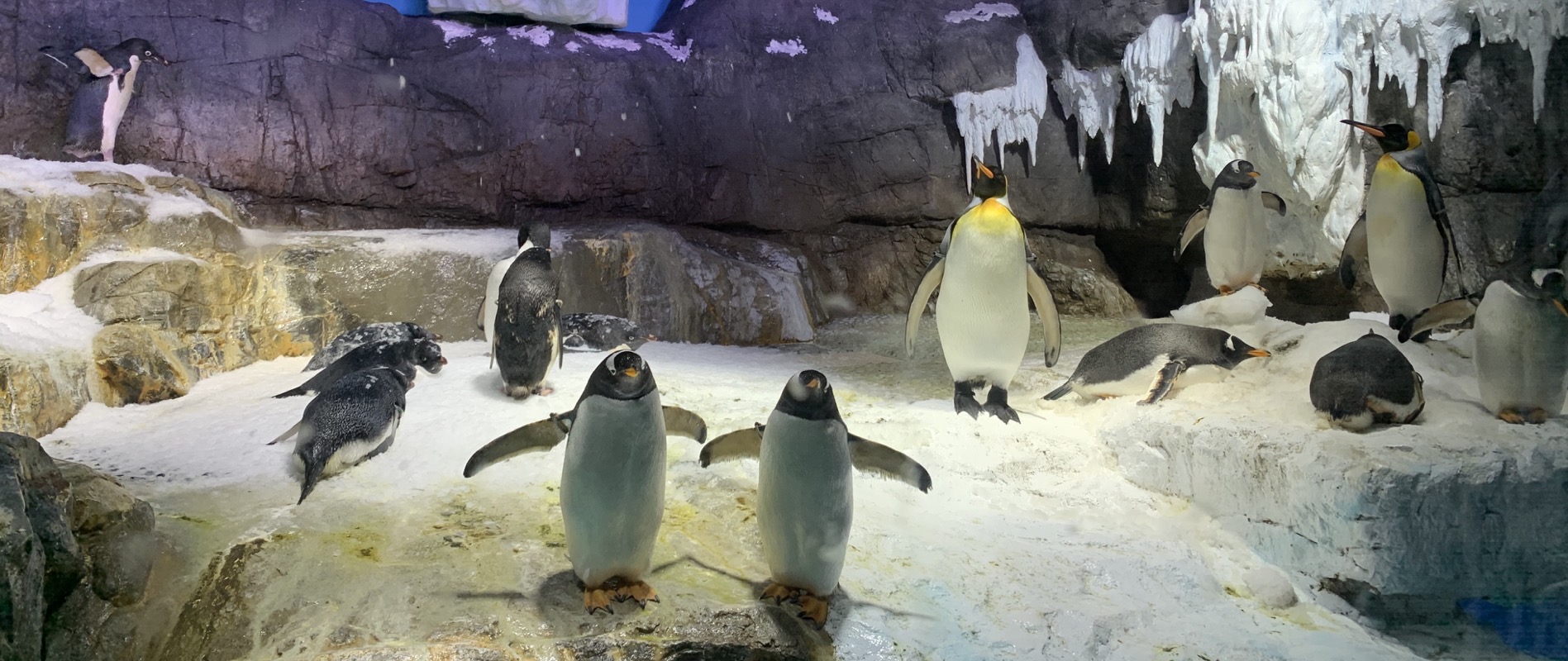
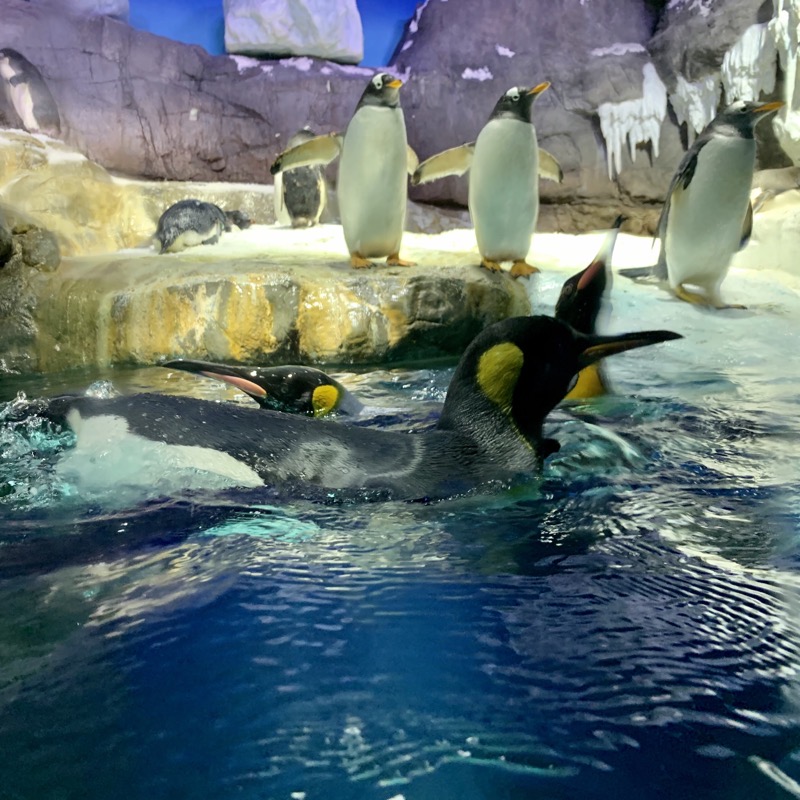
The Antartic display was pretty funny. There was an ice machine dropping “snow” from a hole in the roof, and one guy (who I decided to call Steve) was hogging the spot whil everyone else stood around. One or two penguins were in the water, but everyone else just lay around.
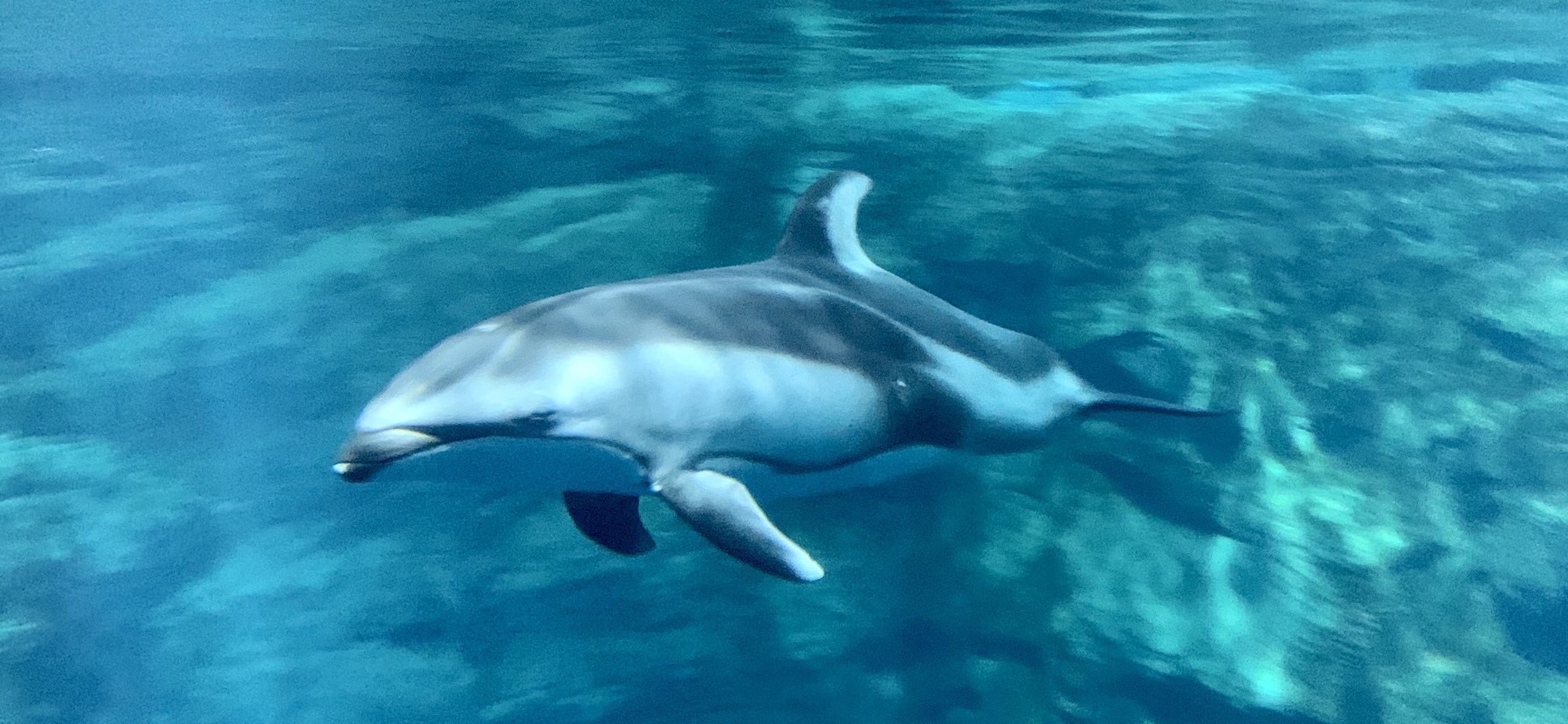
The Dolphin was pretty cool. I tried to get a photo of it being utterly obsessed with this play ring it had, but suffice it to say, it barely left the thing alone.
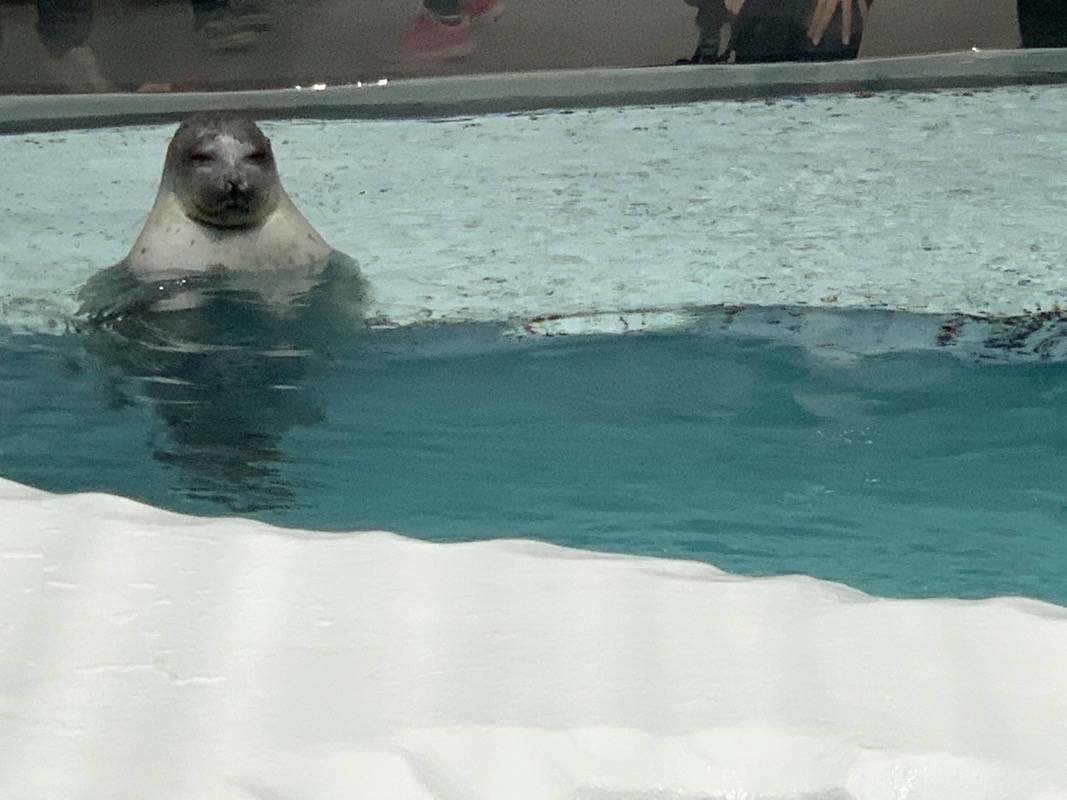
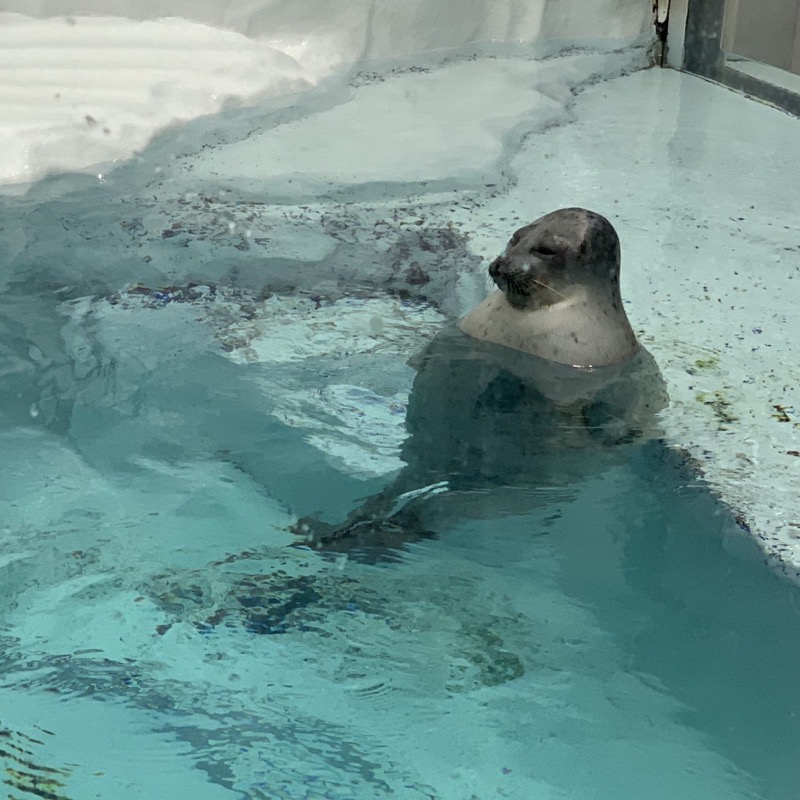
This sleepy seal really knew how to relax. Only saw it move more than a blink once or twice when it went and swam for a lap of the pool… then popped up in place and went back to bobbing in the water.
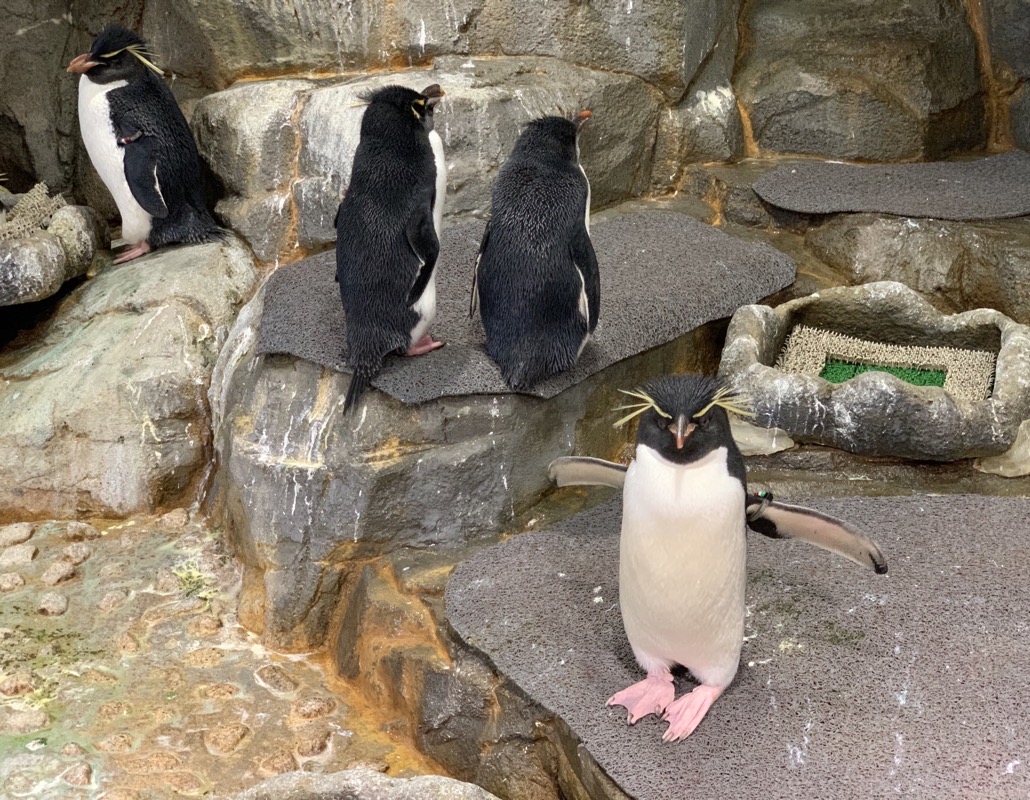
These rockhopper penguins were pretty happy in their enclosure, until the lady came along to wash the poop off the rocks and they all got very confused ^_^
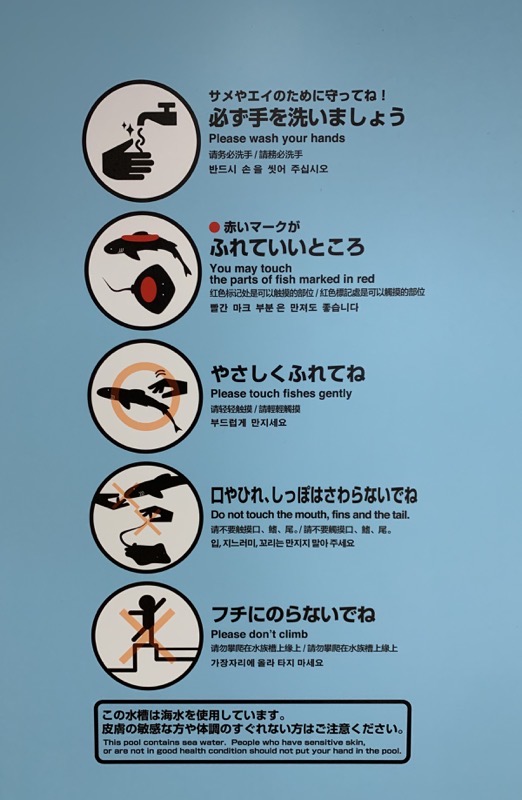
They had a “petting zoo” of sorts. Sharks and rays in a shallow pool. I didn’t really want fishy hands or to bother the poor creatures. They’d had enough of that from the other tourists.
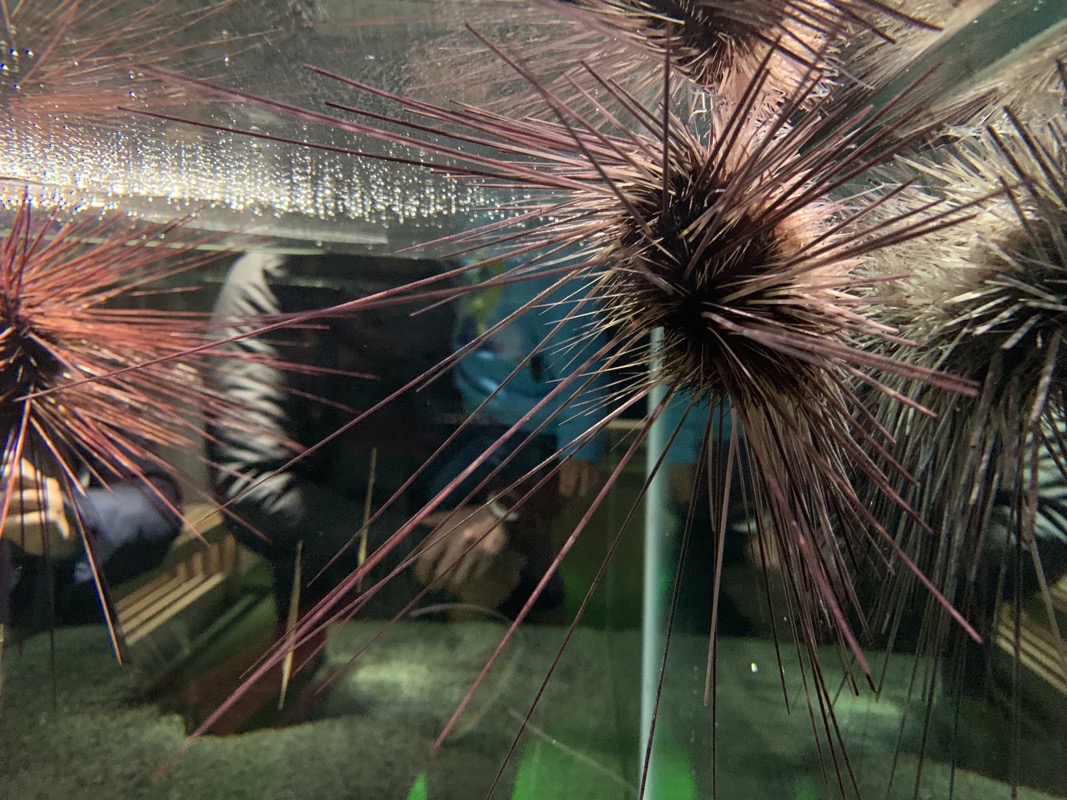
There was a little exhibit of weird and wonderful. They were exactly that.
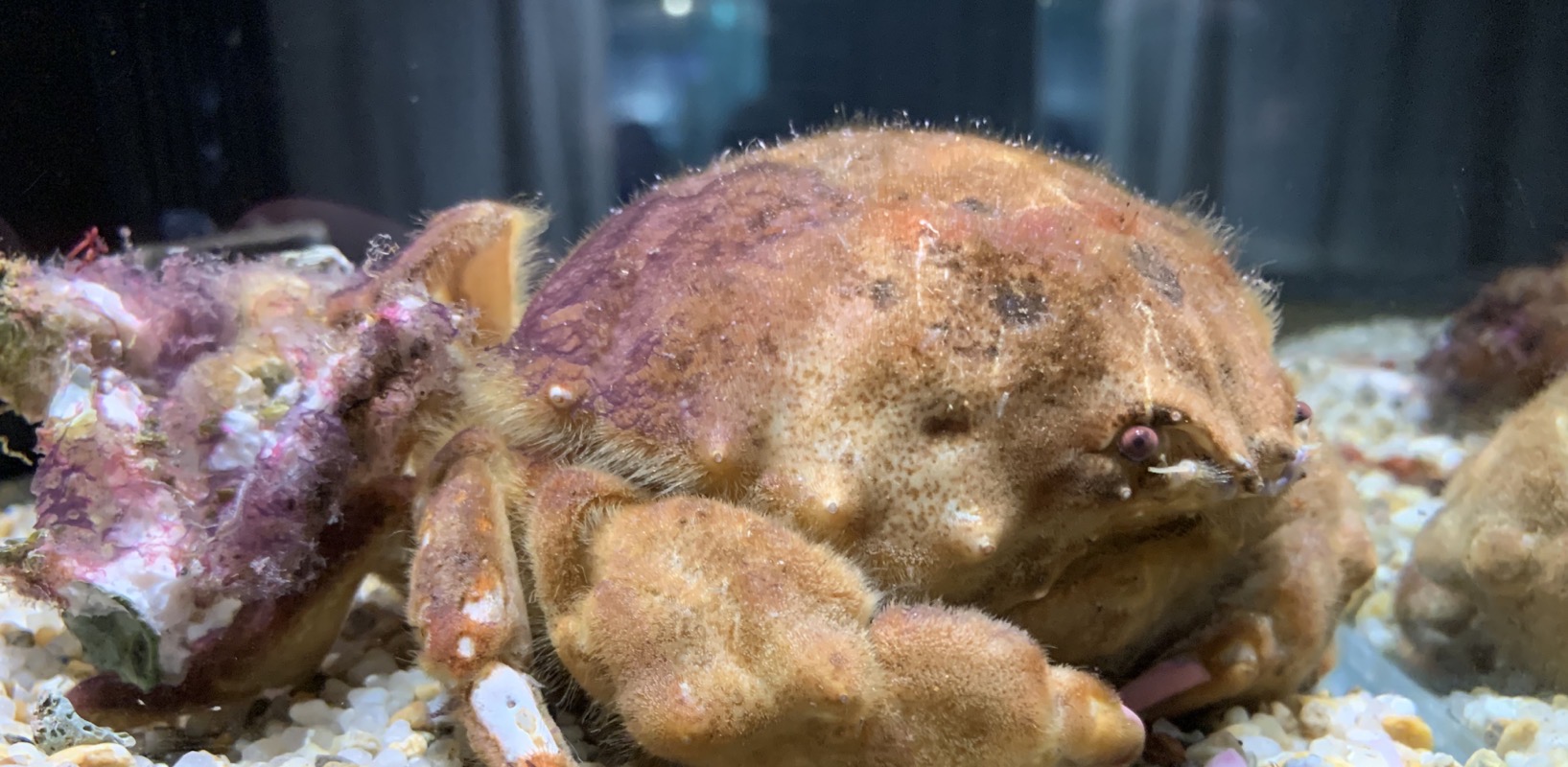
This hermit crab had quite the home. I couldn’t really tell what it was but it looks like a few shells with other residents as well.
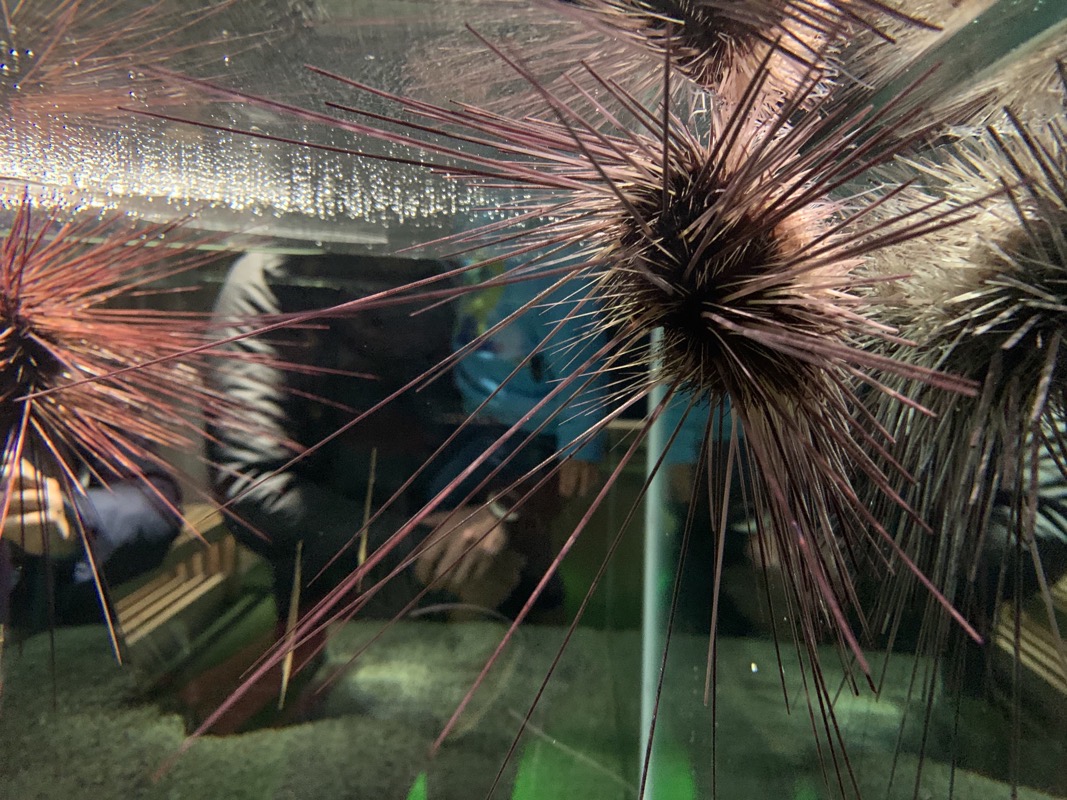
Sardines and anchovies, thousands of them. They were mesmerising.
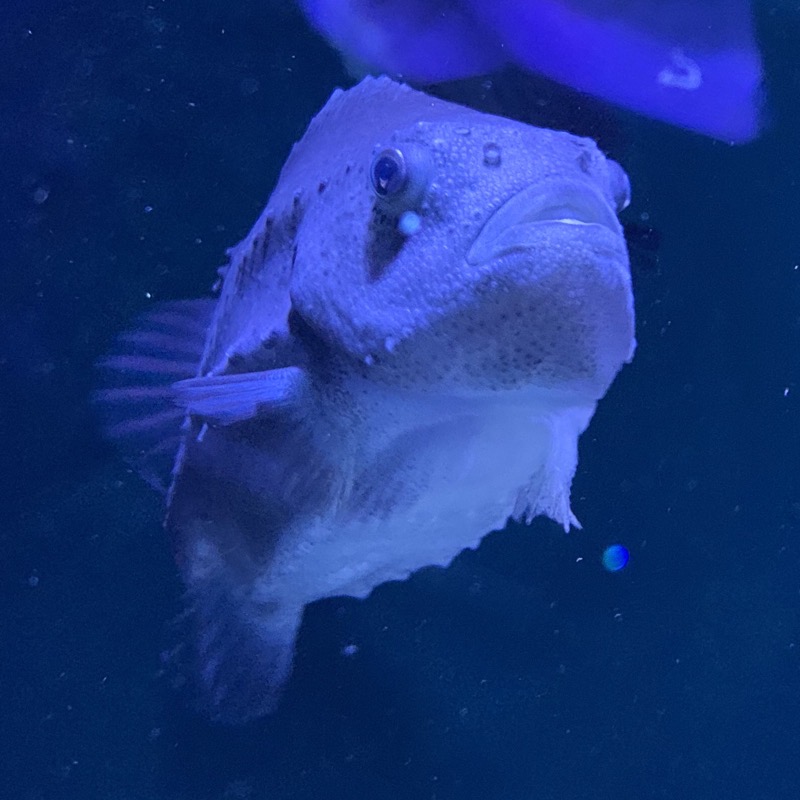
This is the only otter face I saw today, which was a little disappointing, but I totally understand :)
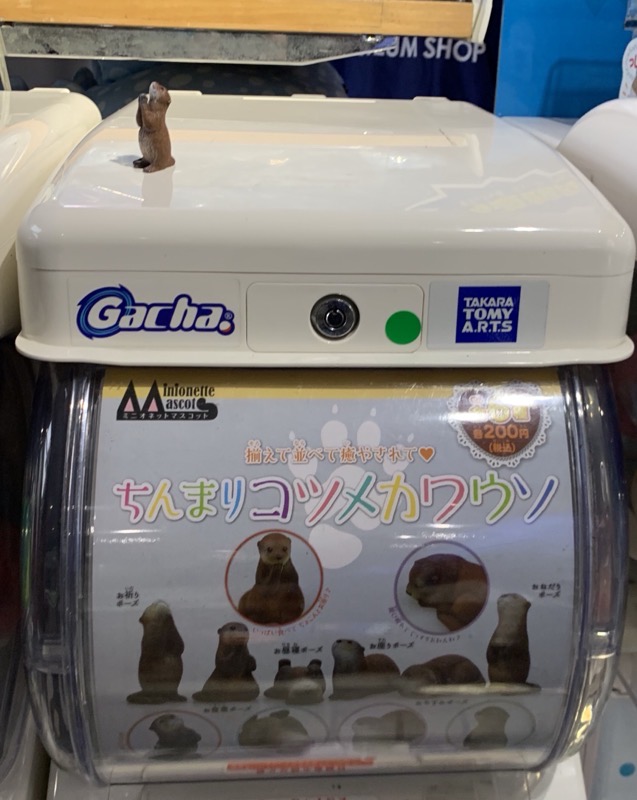
There is a LEGOland discovery centre in the mall complex, but tickets were 2400¥ and without knowing what was in there, and how sleepy I was, it seemed a little rich for today.
Having hit up all the fun things to do near the aquarium, we headed to Yodobashi camera Umeda. Umeda is a pretty busy area, reminded me of Dotombori and Shinbashi.
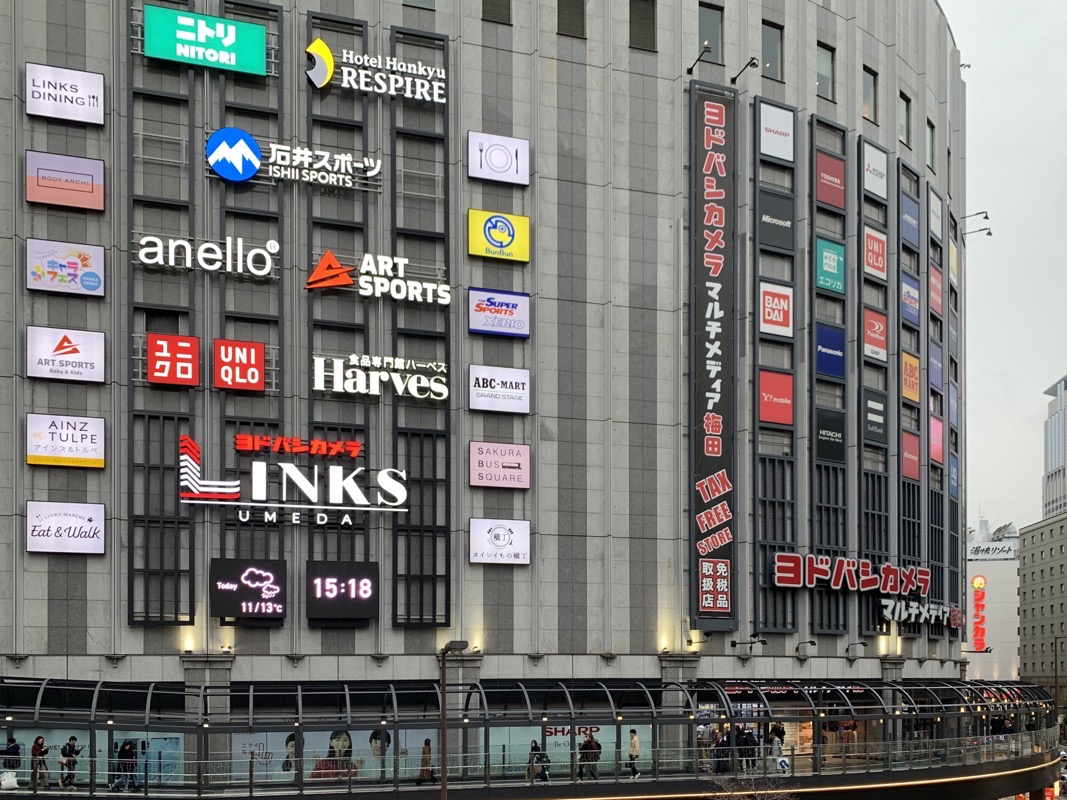
We were there for cheap games and maybe some luggage because the shitty bag I brought with me really won’t cut it for the trip home but I couldn’t bring myself to buy the overpriced stuff they had there so left empty handed.
For dinner tonight we doubled back for the first time. Ramen Tsuji. It’s just that good.